Otterbein University’s Christian Association Building (aka “the Sosh”) 1892-1975
PLEASE NOTE: The blog contains quite a few pictures so give it several minutes to download. They download haphazardly.
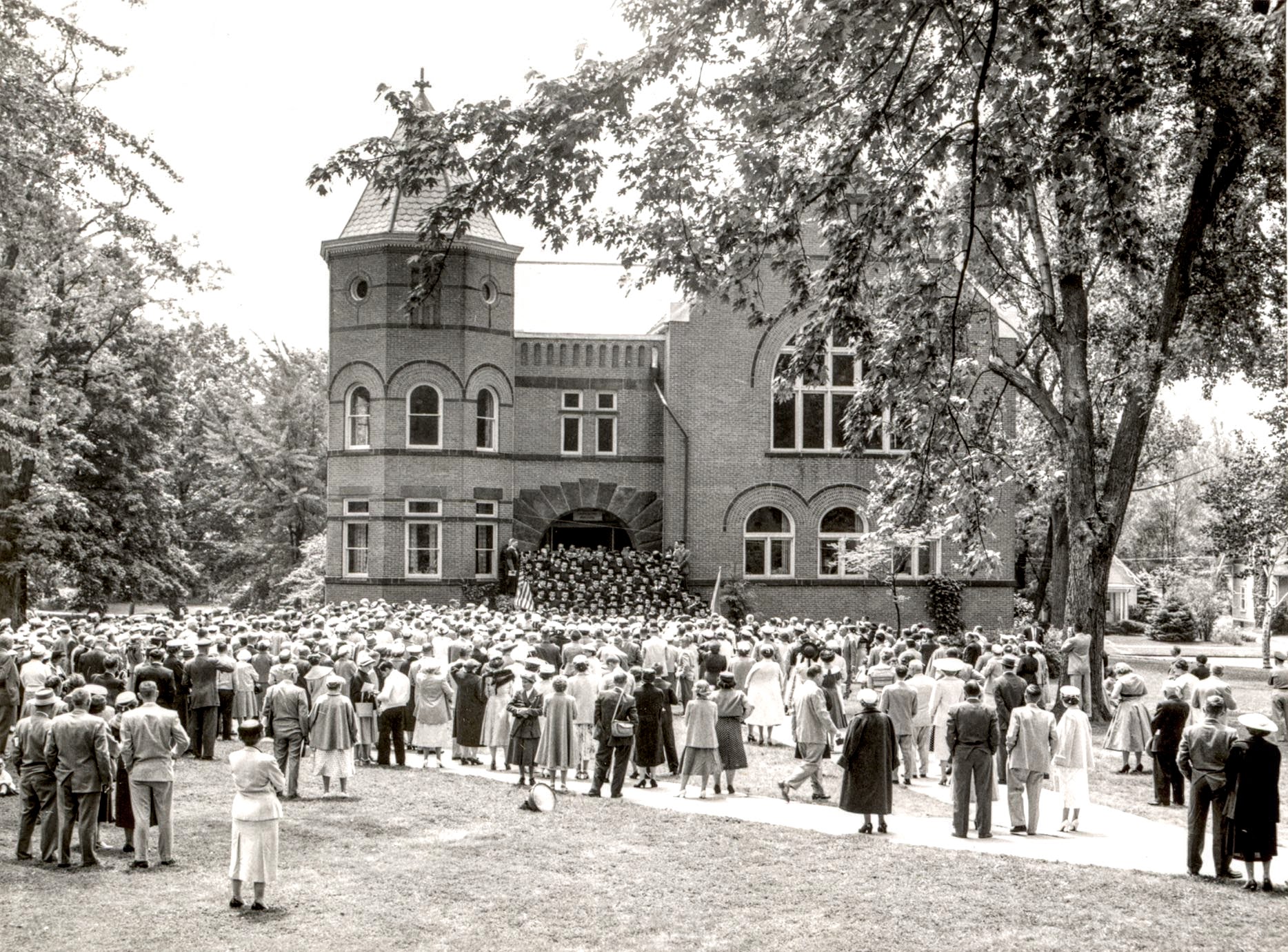
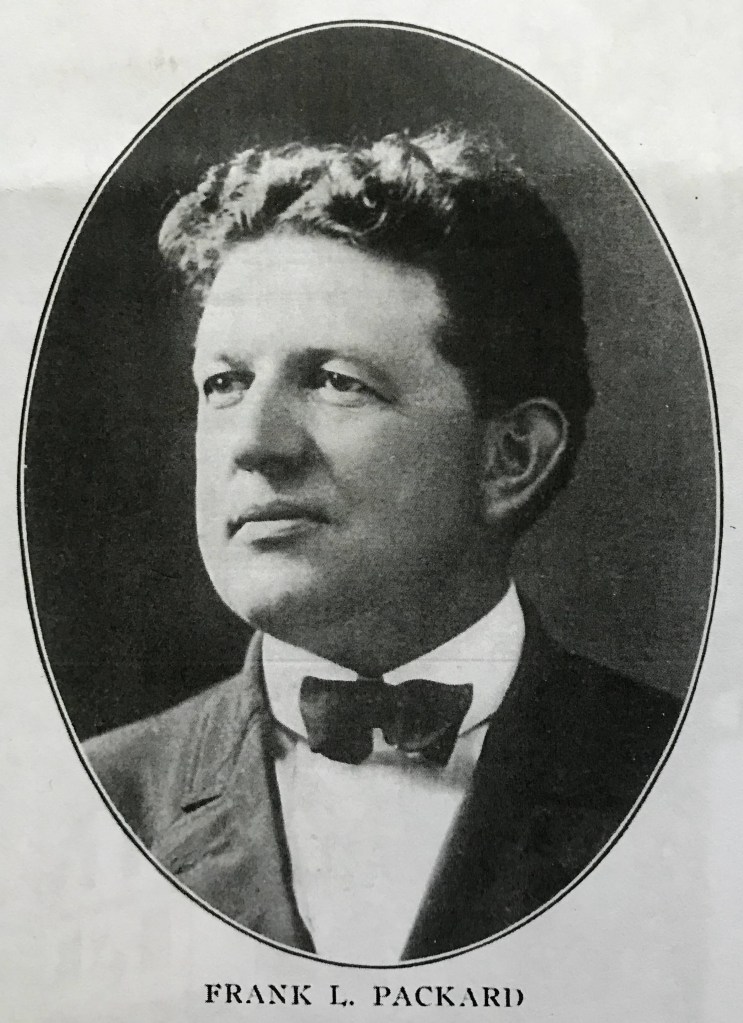
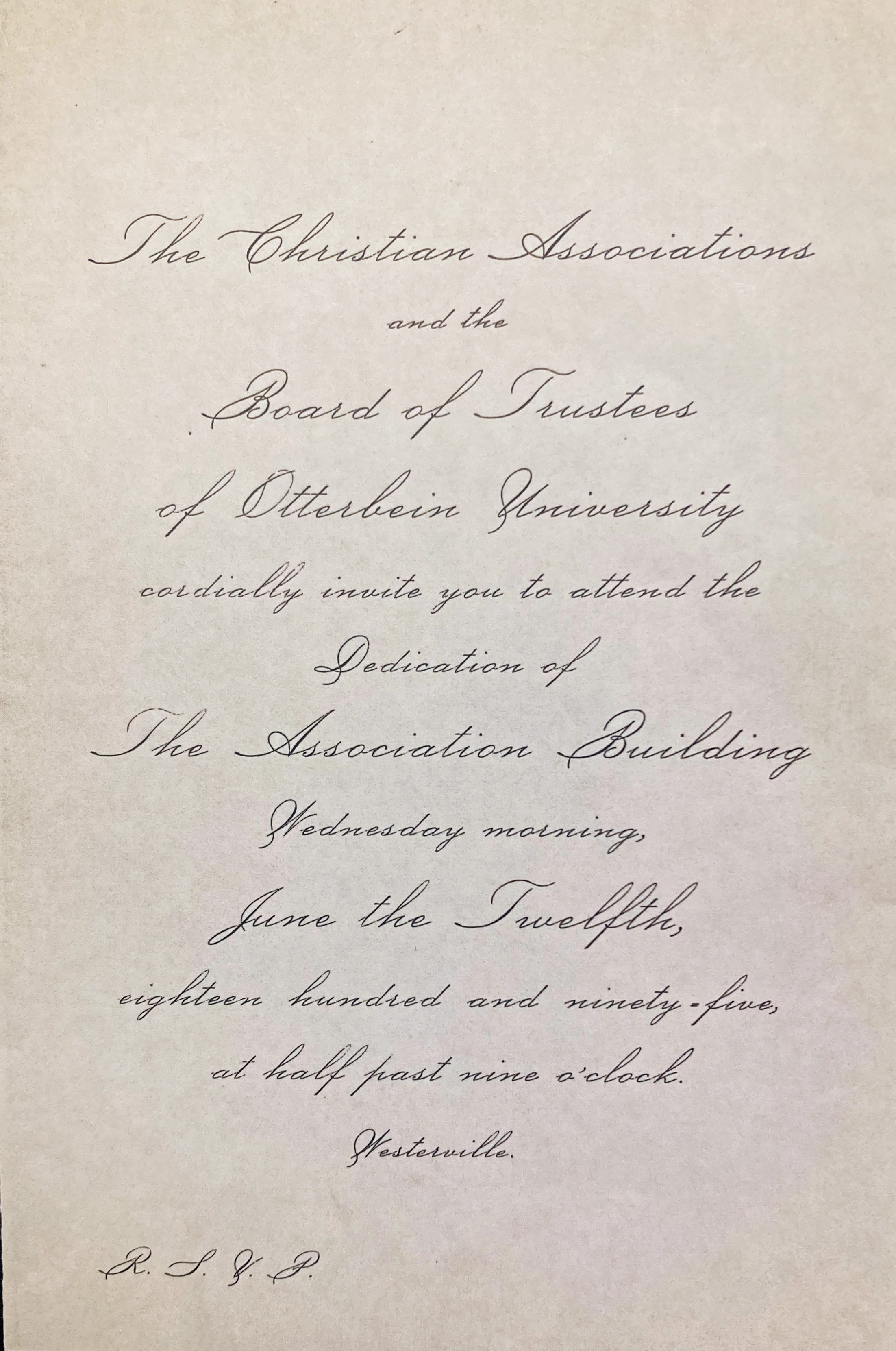
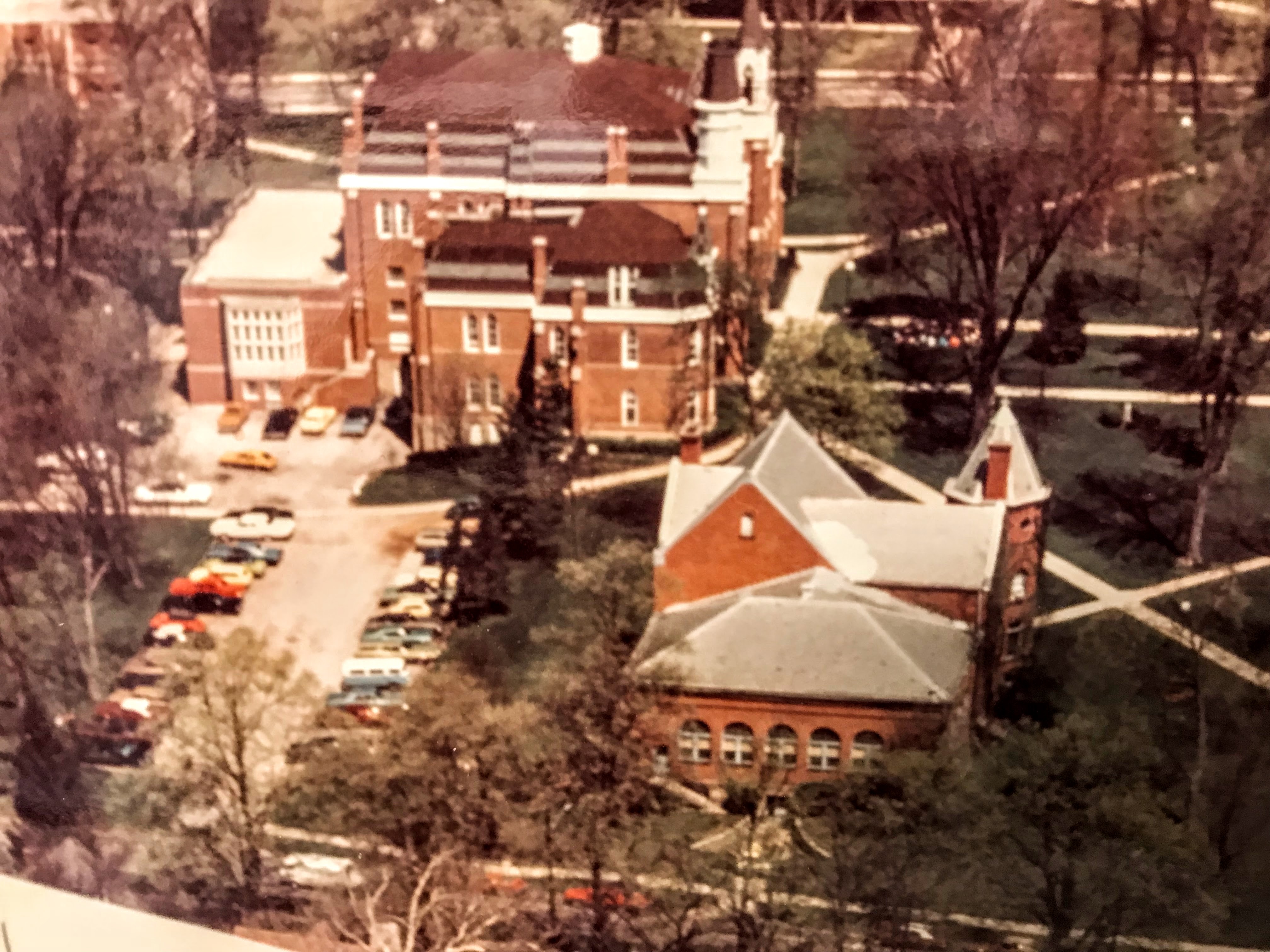
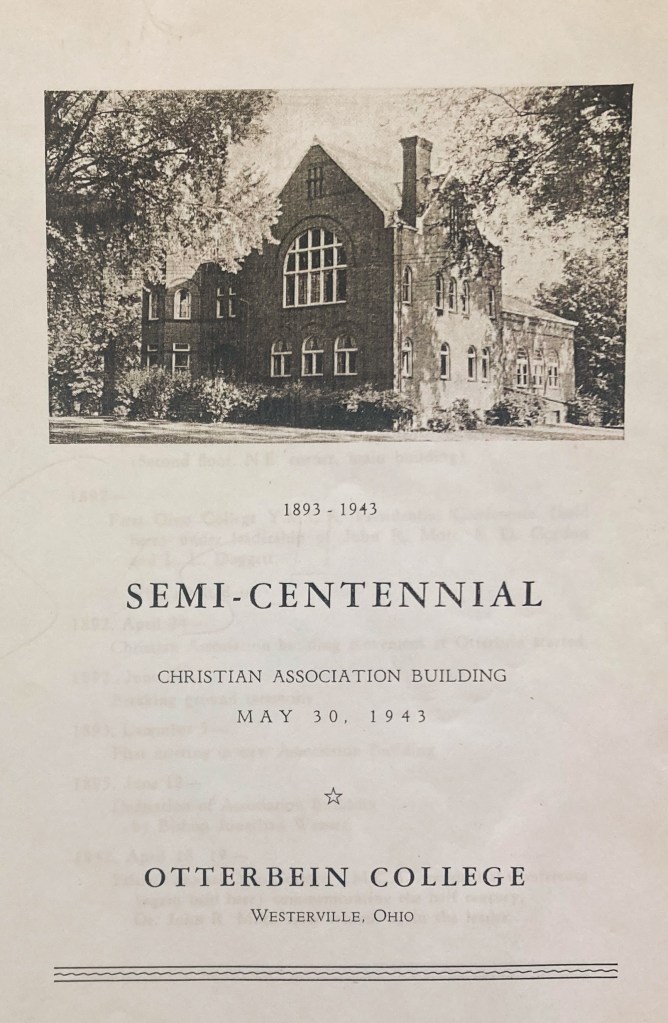
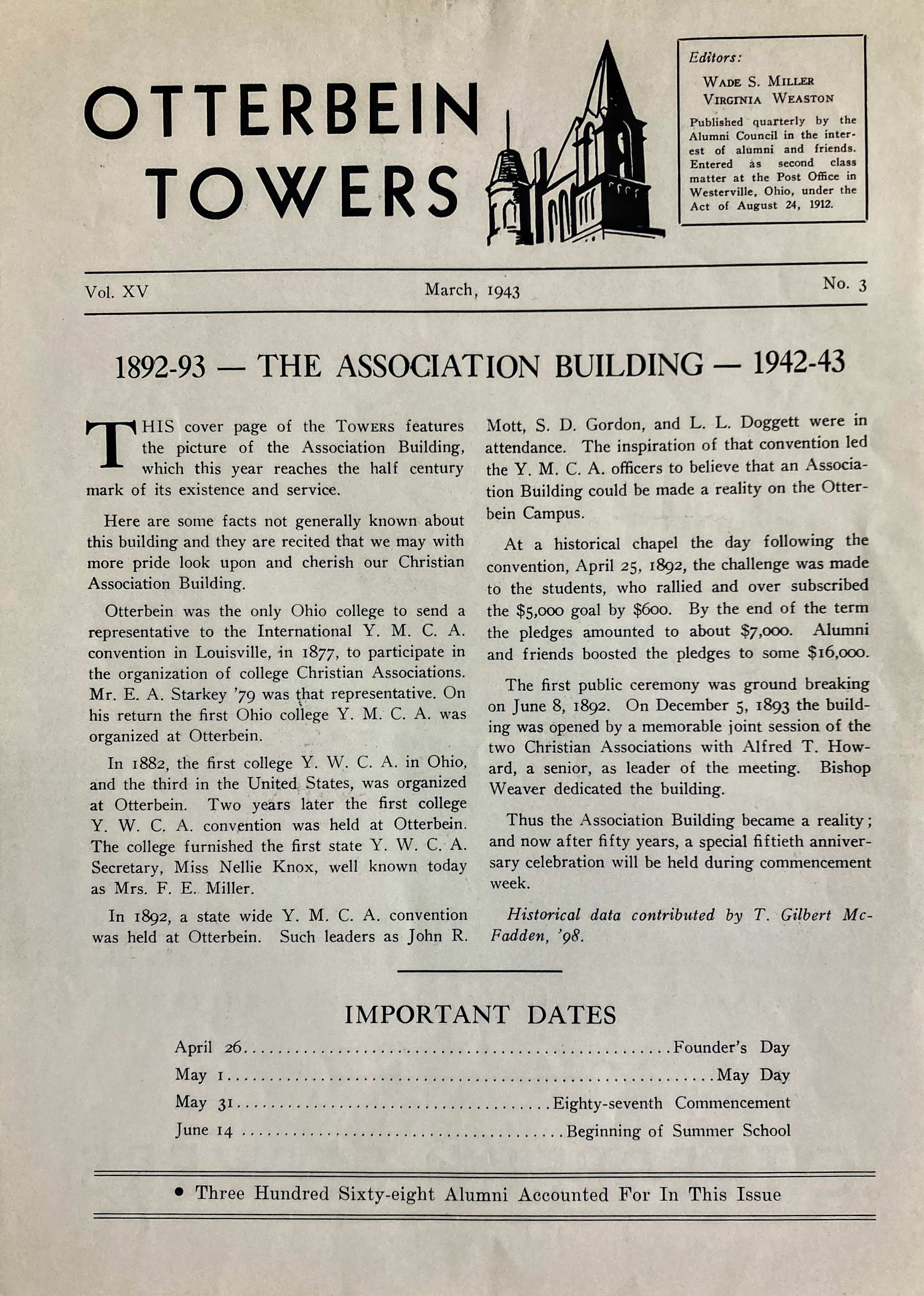
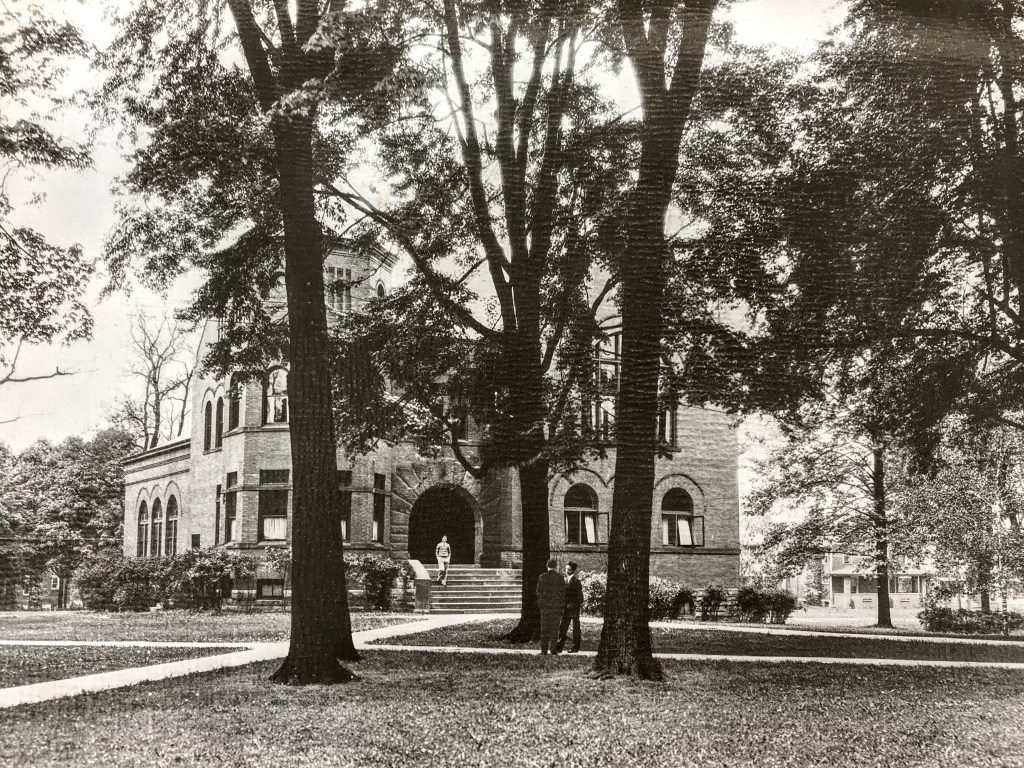
Where Roush Hall stands today, once stood the Christian Association Building. This was a student-led effort to raise funds for a facility that would house athletic, religious and social meeting space. Construction began in June 1892 and occupation was in December 1893. The building was not dedicated until three years later the when final installment on a loan had been met. It was the first college YMCA and YWCA in Ohio. Other campuses followed Otterbein’s lead. Referred to as “the Sosh”, its architect was a young Frank Lucius Packard whose statewide portfolio would become prolific and nationally recognized.
When Alumni Gymnasium was built in 1929, the Sosh became less used. The opening of the Rike Physical Education Recreation Center in 1974 ended its use entirely. Demolition was in 1975.
Thanks to Stephen Grinch, Otterbein University Archivist, for providing access to the historical material that follows here in picture…and completes the story of this attractive Gilded Age building.
Published December 2025
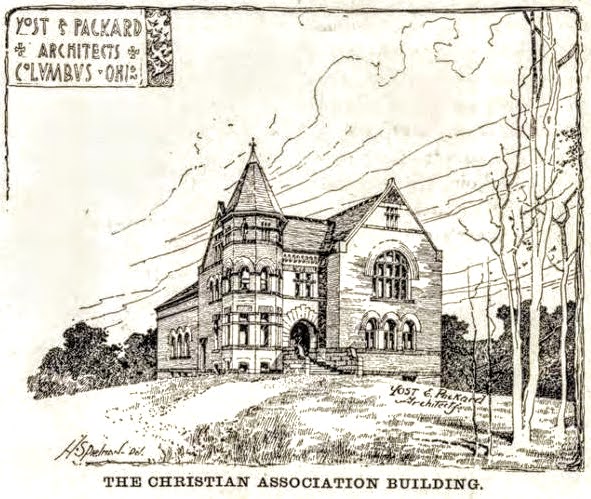
The prominent Columbus architectural firm Yost & Packard, as noted at the upper left and near bottom right, was selected to design the building. Photo credit above and below: November 1892 issue of the Otterbein Aegis, Otterbein Digital Commons.
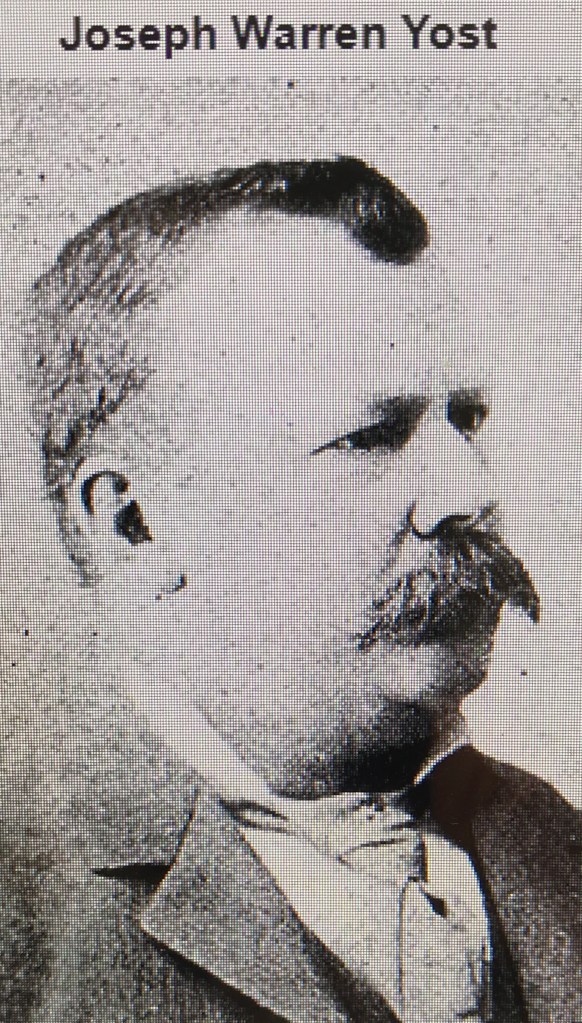
This is the earliest known picture of Otterbein. It’s on a canvas type material. The Sosh building was built near where the smaller structure stands on the left. Photo credit: Otterbein Archives.The designs of these two nationally known architects were prolific during America’s Gilded Age. Their work stretches across 74 of Ohio’s 88 counties, and their bios are summarized on the web’s Wikipedia. I have been researching their work since 2018 and published a quite few Yost & Packard blogs with more planned.
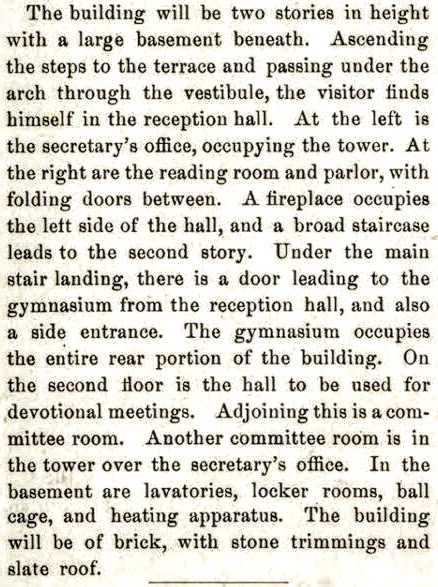
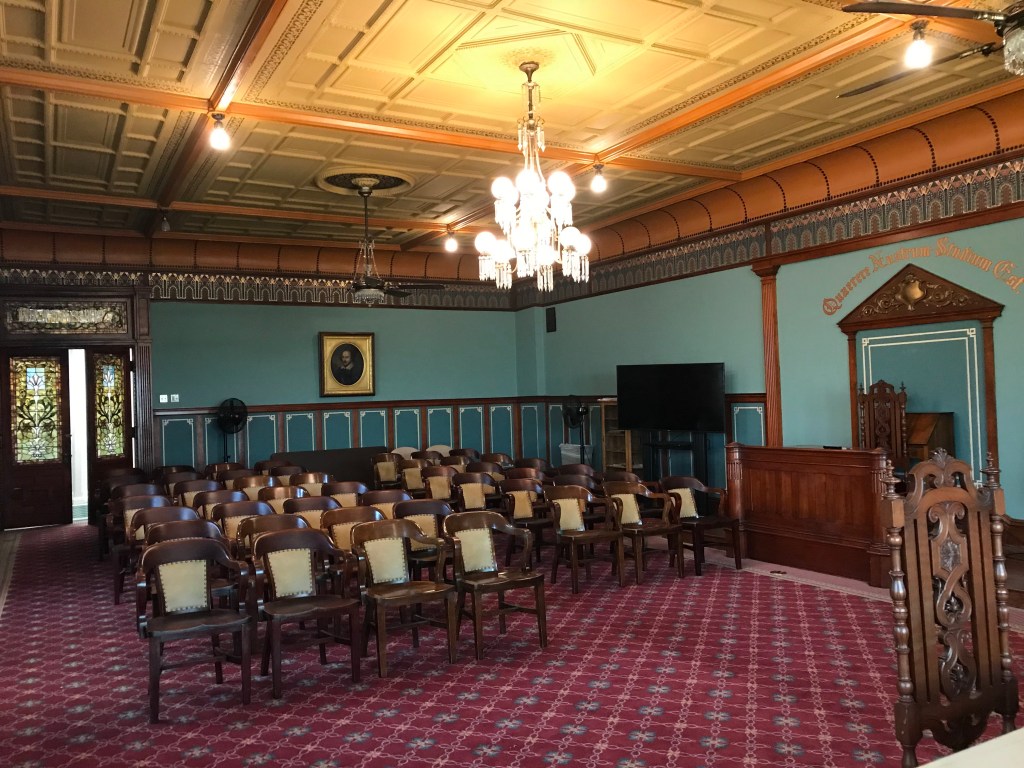
Based on this article, it looks like this was a Frank Packard design. That makes sense as he previously, in 1891, designed the remodel of the Philomathean Room in Towers Hall.
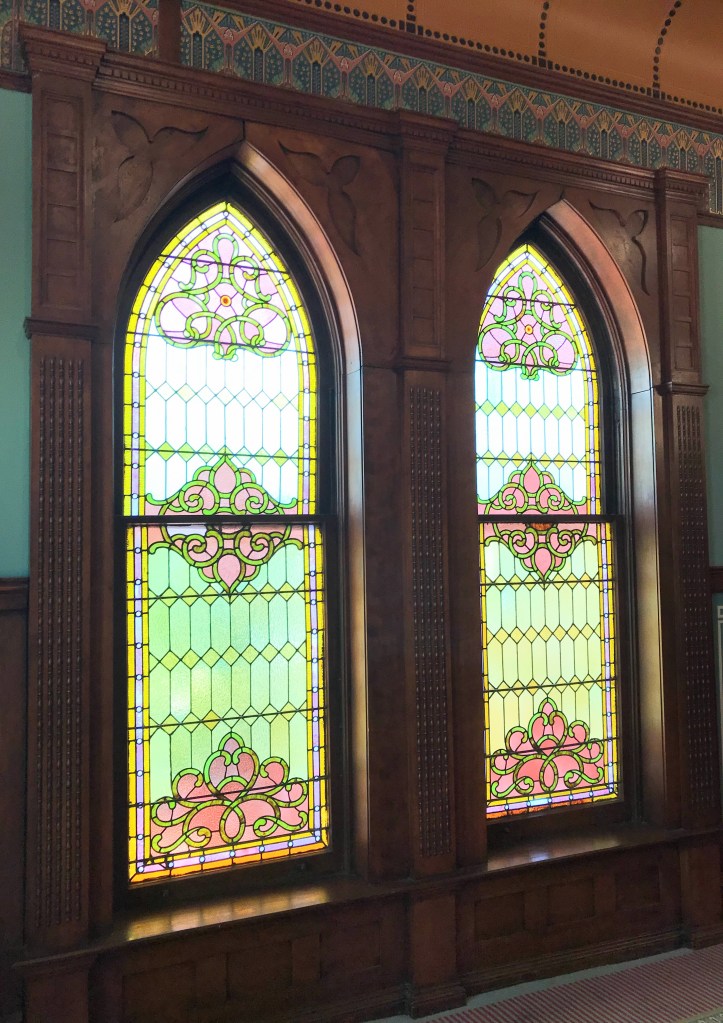
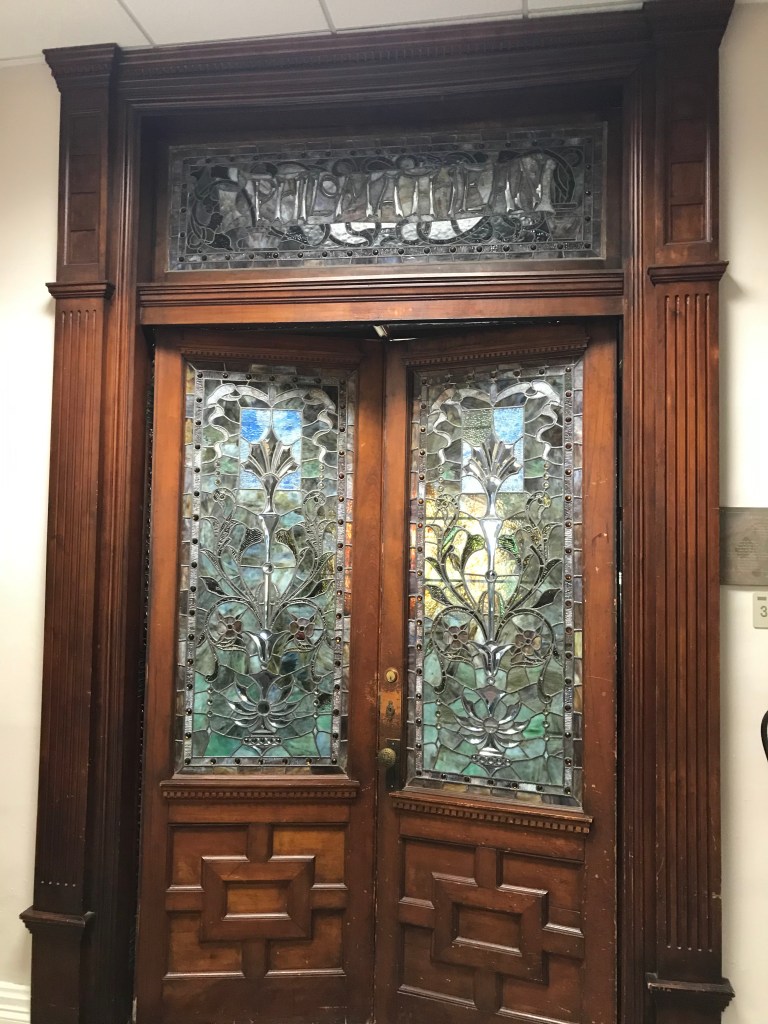
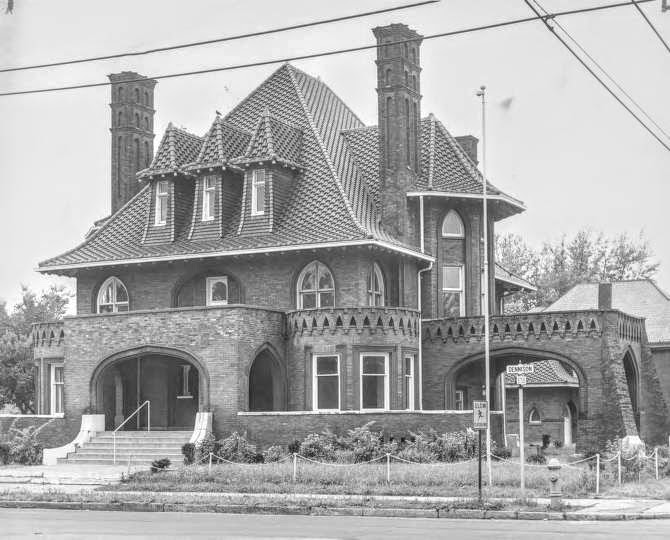
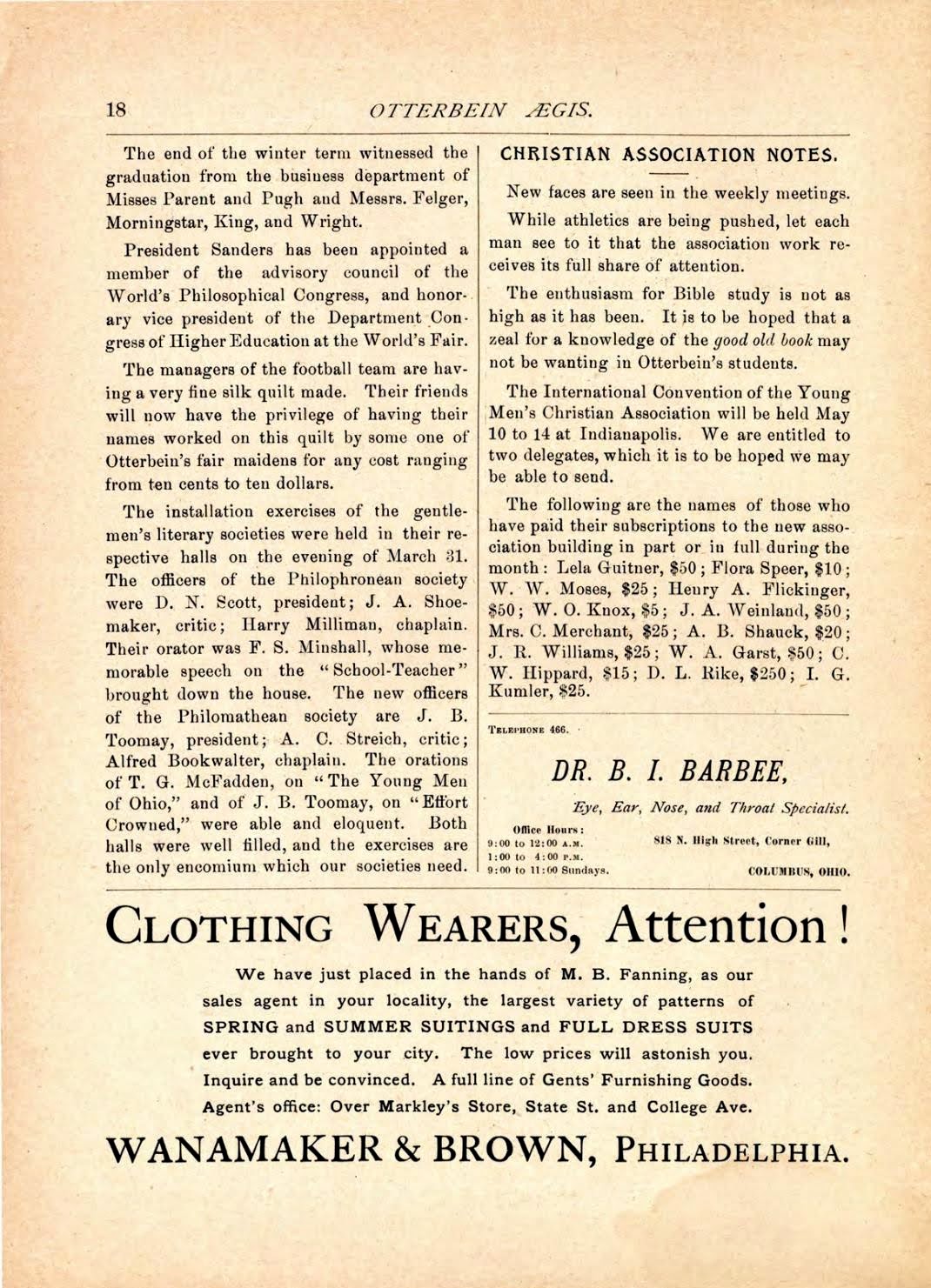
Philomathean Room after the spring 1891 remodel. The windows, entry doors, woodwork and ceiling have been preserved and remain to this day. Edgar L. Weinland, Class of 1891, was president of the Philomathean Literary Society at that time. Only 4 years separated these two men in age, and it’s likely they became lifelong friends. Weinland was chair of the building committee for the Packard-designed Carnegie Library built in 1908 that now houses the Otterbein Office of Admission. Packard later designed Weinland’s cottage-style house south of the O.S.U. campus. Edgar was City Attorney for Columbus. Weinland Park, a neighborhood in the Short North, is named in his honor. Photo credit: Otterbein Archives.Yost & Packard donated to the fund-raising campaign for the building (8 lines up from the bottom right above). Their gift and that of David L. Rike, both at $250 each, were the largest received. Photo credit: January 1893 issue of the Otterbein Aegis, Otterbein Digital Commons.One of Frank Packard’s best known Columbus designs is “the circus house” at 755 Dennison Avenue across from Goodale Park in the Short North. It was built in 1895 for Peter and Mary Sells. Today’s look is minus the dormers and other architectural features.
Sells Brothers Circus was based in Columbus. Later it became Ringling Brothers Circus.
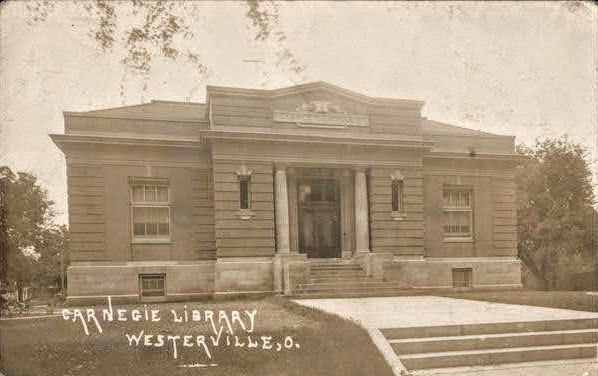
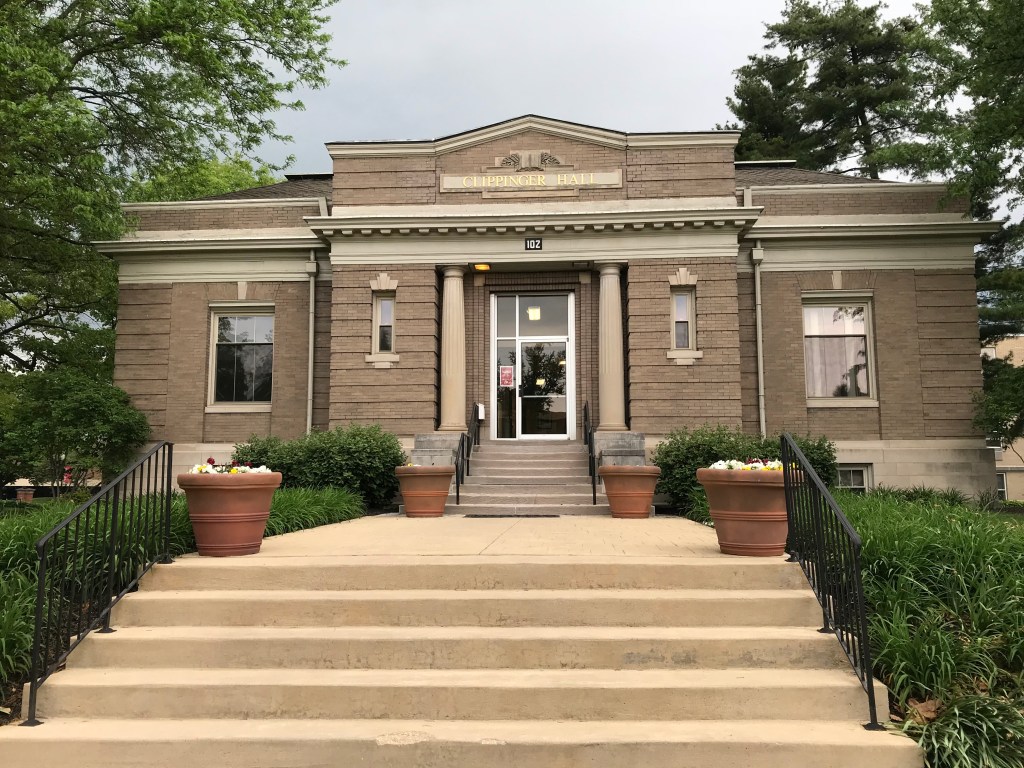
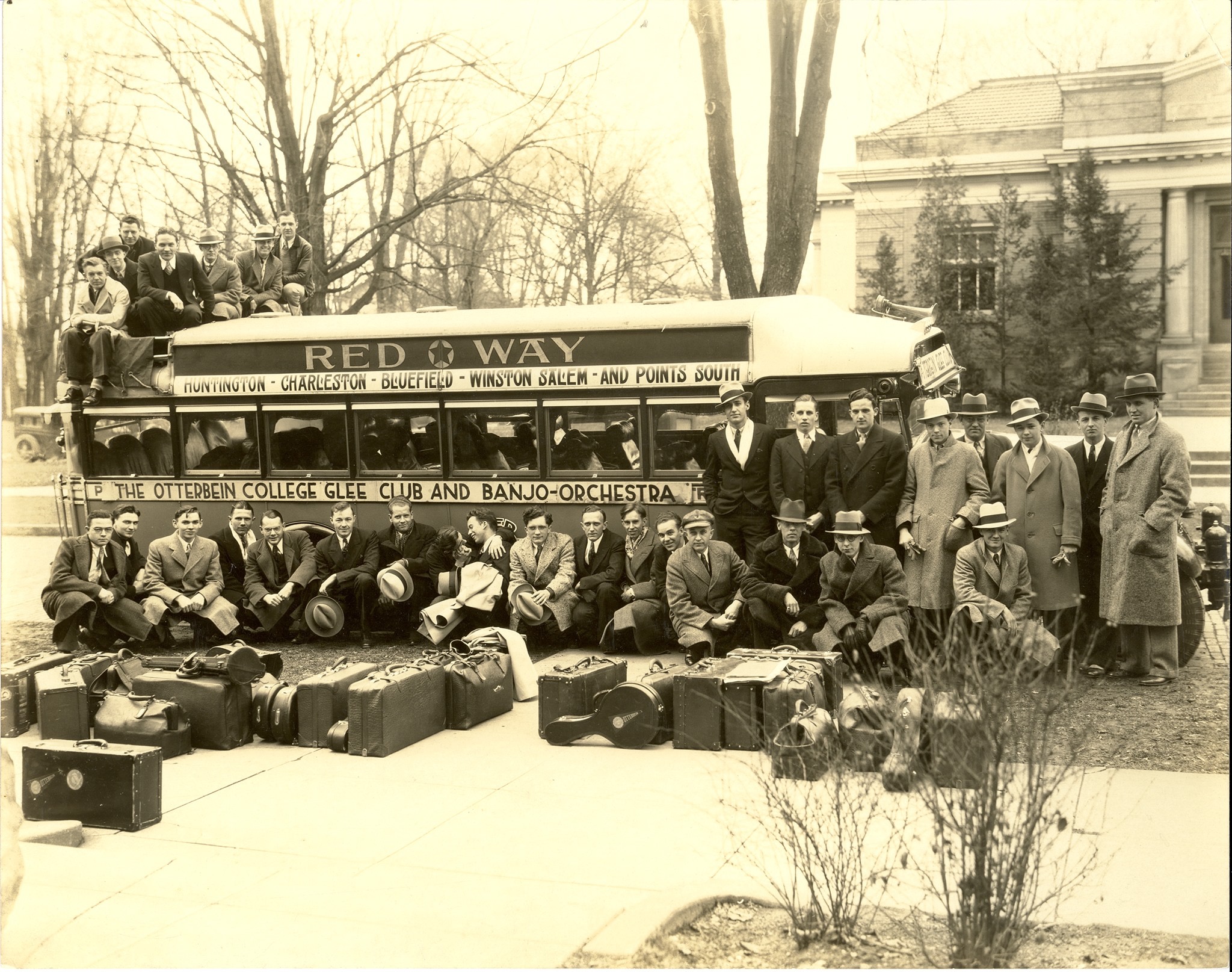
Frank Packard’s two other Otterbein designs are the Professor William and Jessie Zuck house of 1897 (now the east parking lot of the Campus Center)and the Carnegie Library of 1908 (now houses the Office of Admission).Carnegie Library in the background. Thought this was an interesting and fun picture to add to the blog. Photo credit: Otterbein Archives.The Rike gift of $250 appears at the end of the above column entitled Christian Association Notes.Photo credit: February 1893 issue of the Otterbein Aegis, Otterbein Digital Commons.David L. Rike was the founder of Dayton’s premier department store. Married to Salome Kumler, he was later joined in the business by Salome’s brother Samuel. Both of these men were ardent supporters of Otterbein.The Rike-Kumler Department Store was commonly referred to as Rike’s.A new downtown store was constructed in 1911. Photo credit above and below: Facebook page of History of the Daytonians.David’s son Frederick, Otterbein Class of 1888, took the helm when his father retired. Both men served terms as Chair of the Otterbein Board of Trustees.
Many Kumlers attended Otterbein.
Photo credit: Westerville Public Opinion of 6/2/1892.
Construction is completed…fall 1893.
While ground was broken in June 1892, the building was not dedicated until 3 years later in June 1895 when a construction loan was fully paid. Photo credit: Otterbein University Archives.
Photo credit: Otterbein Archives.
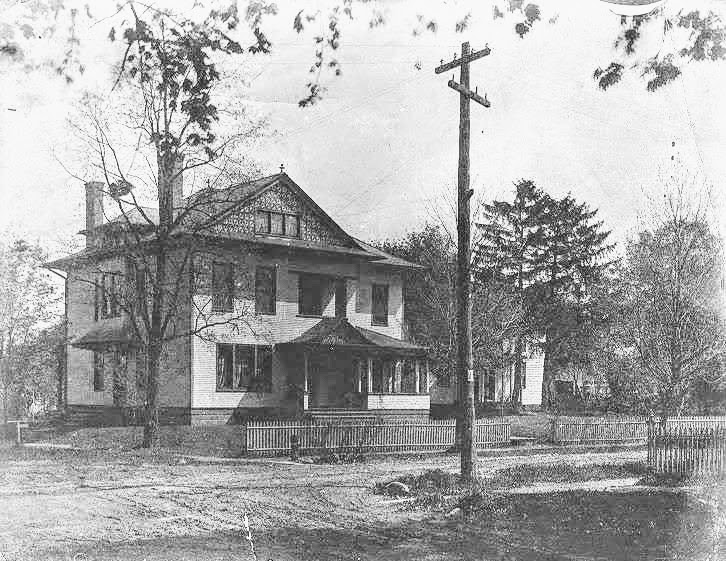
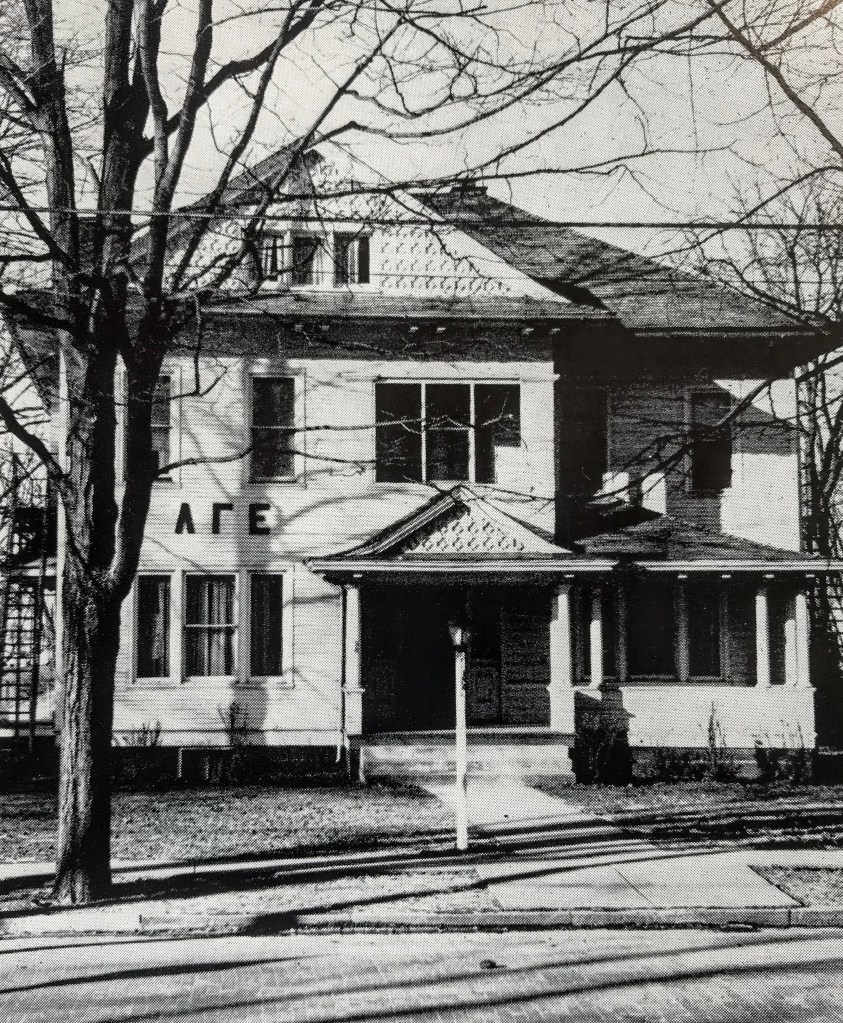
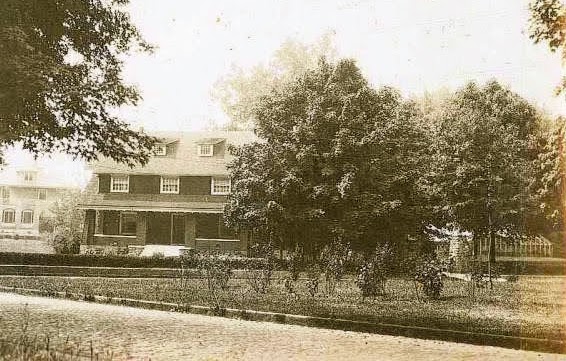
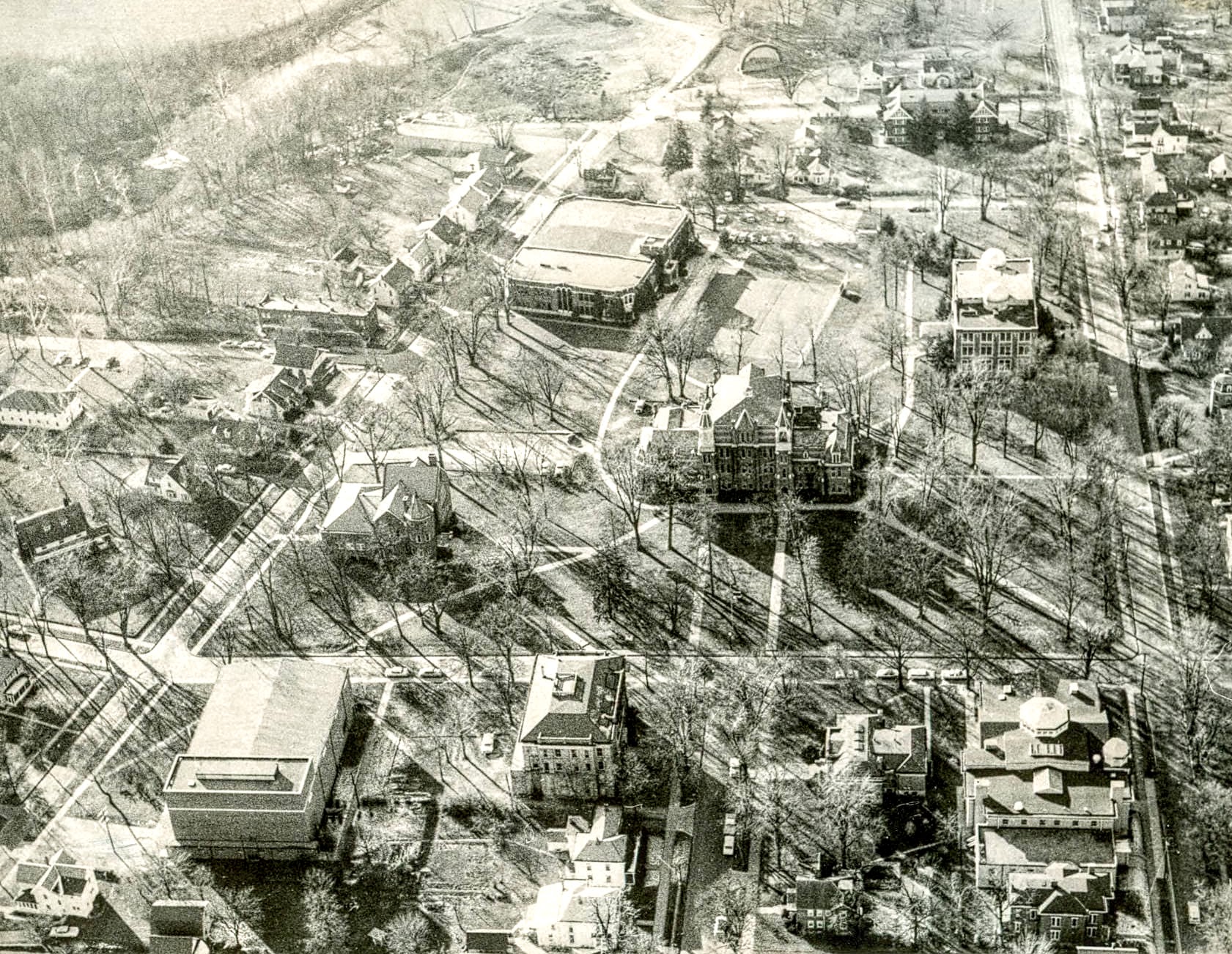
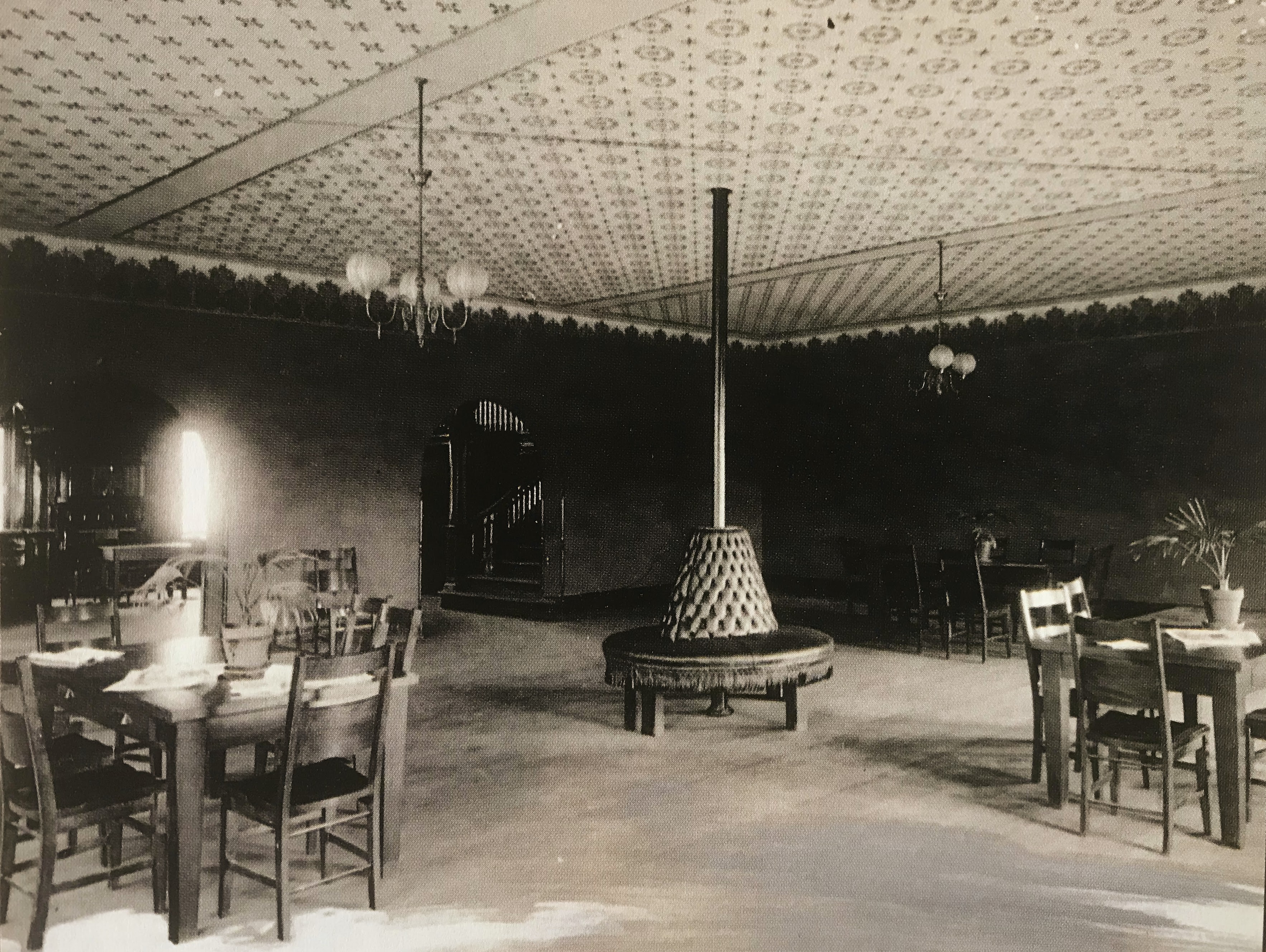
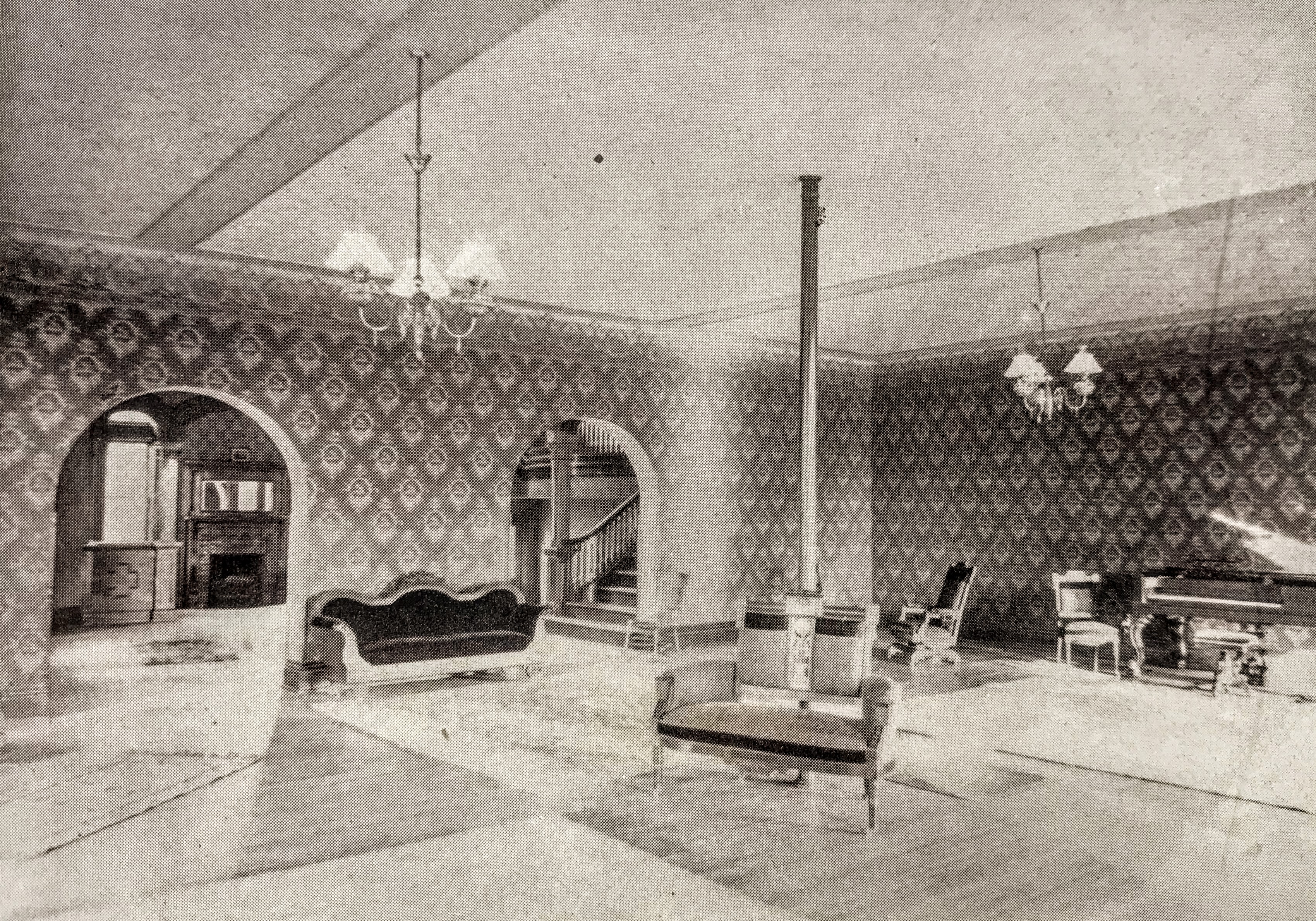
An opposite corner neighbor to the Sosh building at South Grove and West Park Streets was the home of Purley and Lillie Baker (at left). Note the greenhouse to the right of the Baker house. Purley was General Superintendent of the Anti-Saloon League of America based in Westerville. The property originally consisted of 11 acres including a greenhouse pictured to the right of the house. The Bakers sold vegetable plants and also had a milk house to run a dairy service. The Baker property was known as “Greendale.” Later, it was the first location of the Westerville Public Library. Today it’s Otterbein’s “Howard House” and is part of Temperance Row Historic District listed on the National Register of Historic Places. Pi Kappa Phi “County Club” Fraternity can be seen in the background at leftand the greenhouse at right.Circa 1970.Bird’s-eye view 1975.…and from the 1950’s. Photo credit: Westerville History Museum.Photo credit: above and three interior pictures below from the Otterbein yearbook Sibyl, Otterbein Digital Commons.
Photo credit: Otterbein Archives.
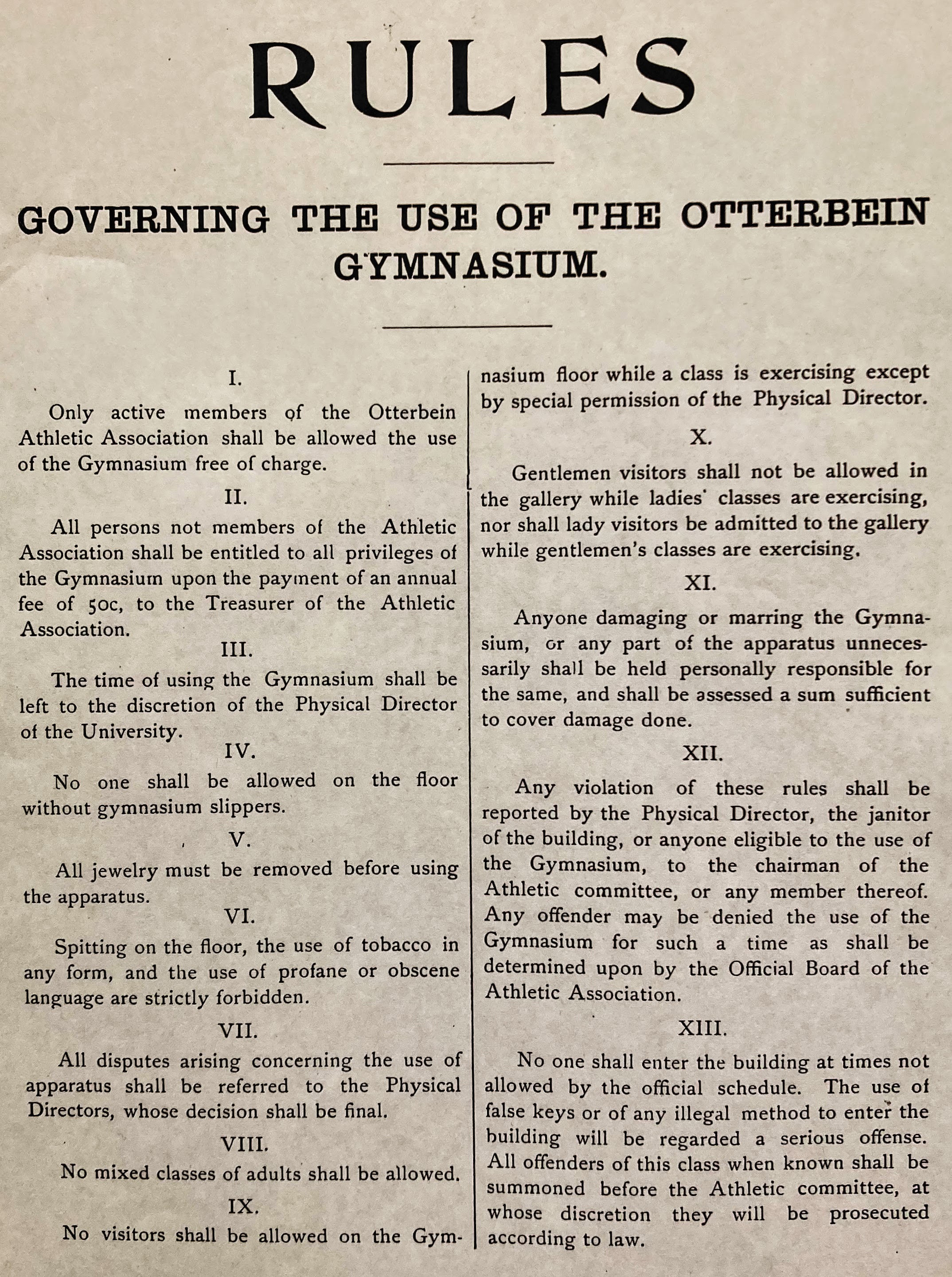
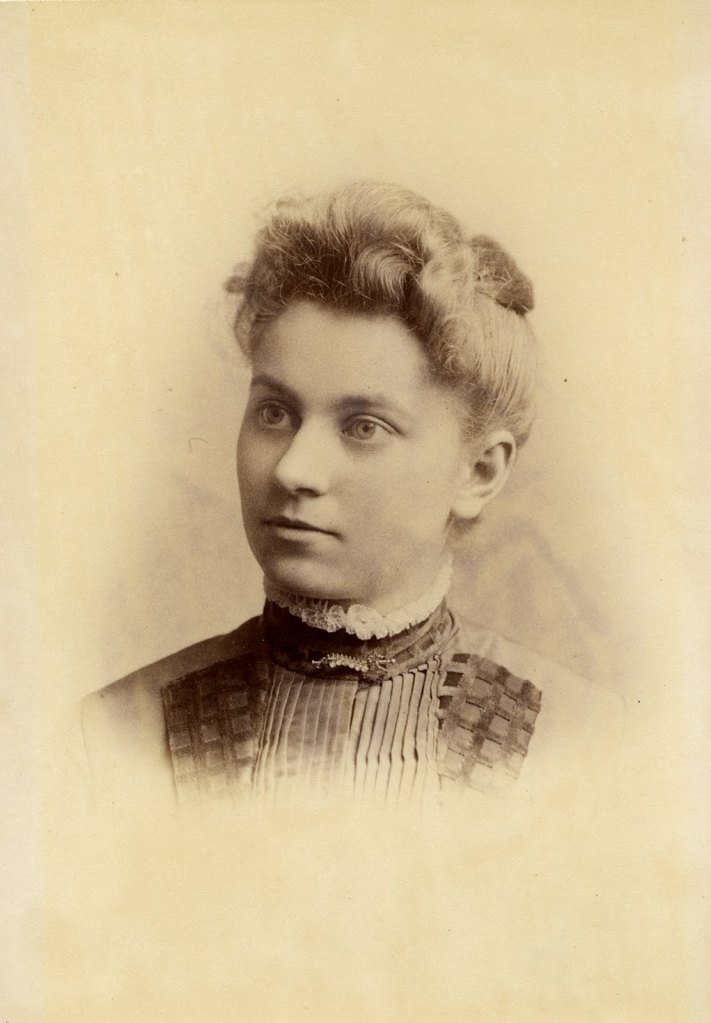
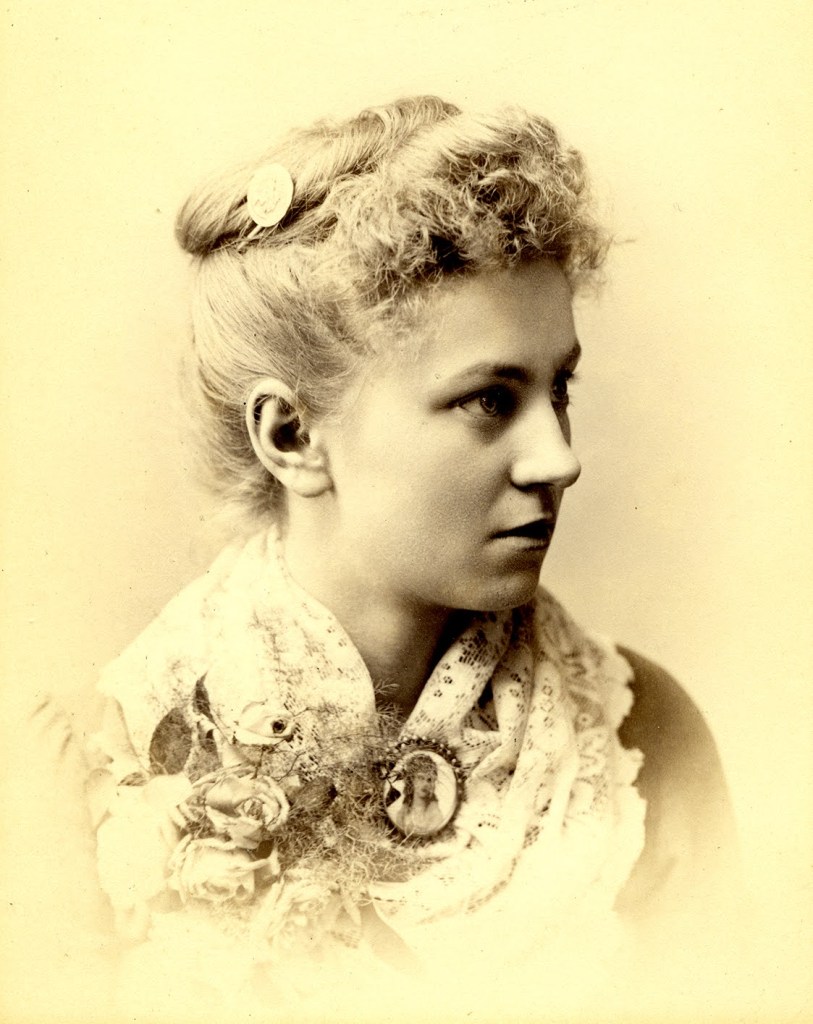
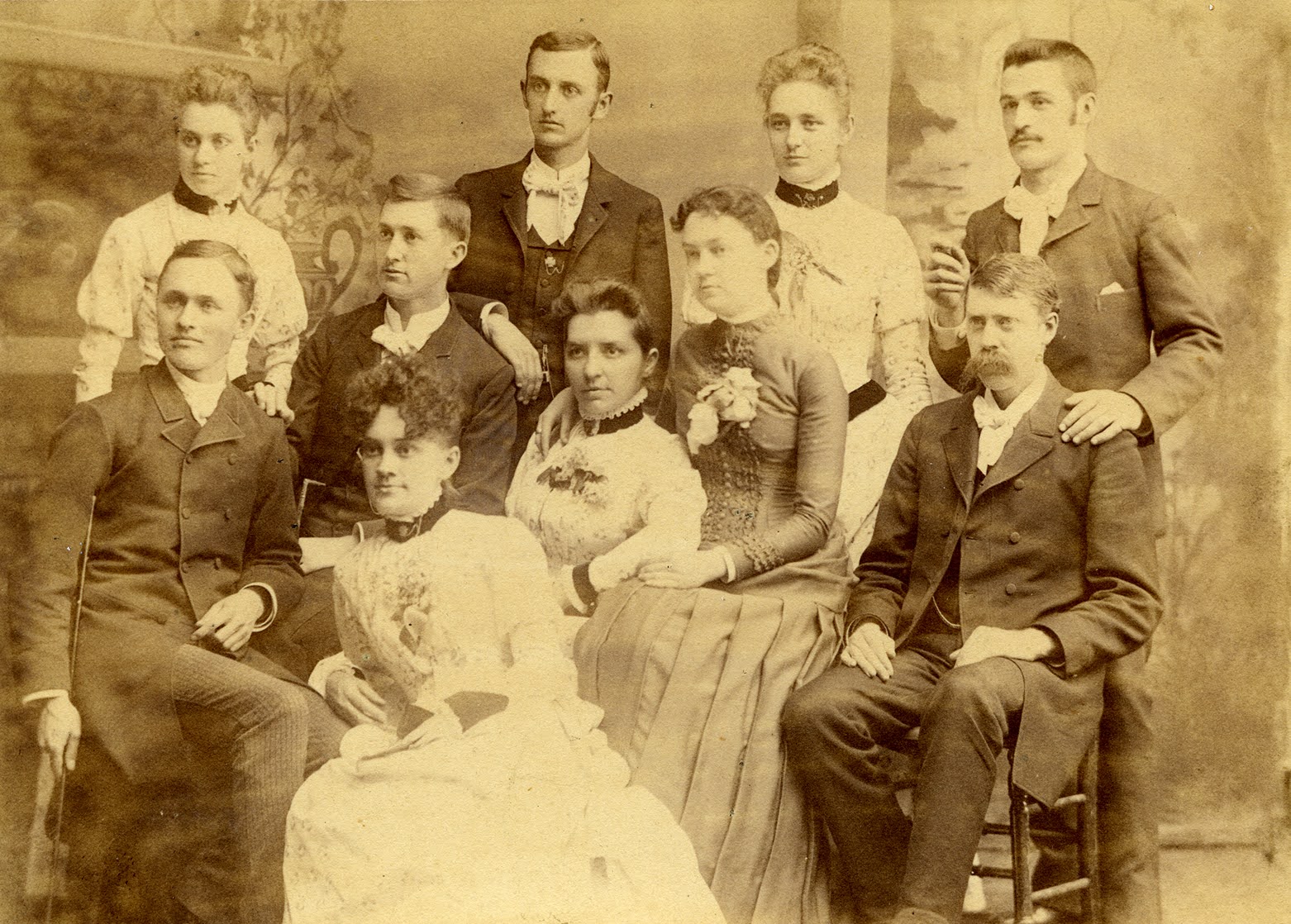
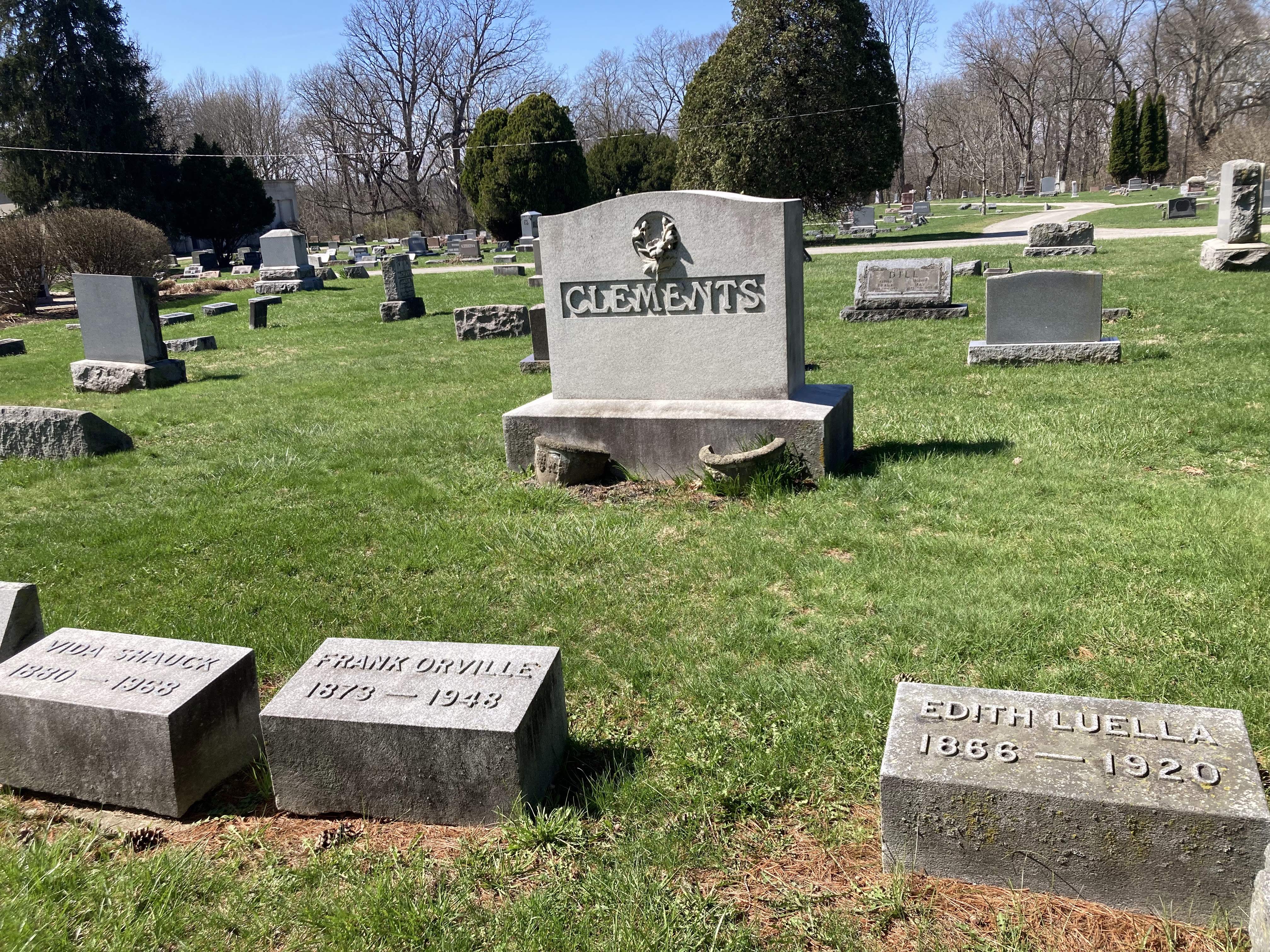
E. (Edith) Luella Fouts was the first “physical director” as referenced in the Rules above. Luella’s actual title was Director of Physical Culture. Photo credit: Otterbein University Archives.Pictured at top left is Luella with her Otterbein graduating class of 1889. Photo credit: Otterbein Archives.
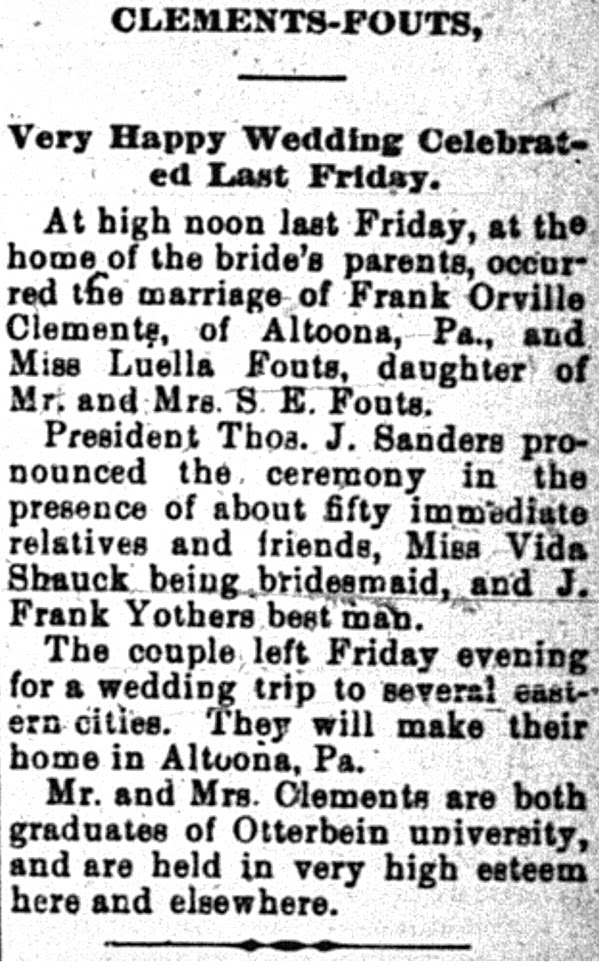
Photo credit: Public Opinion 9/13/1900.
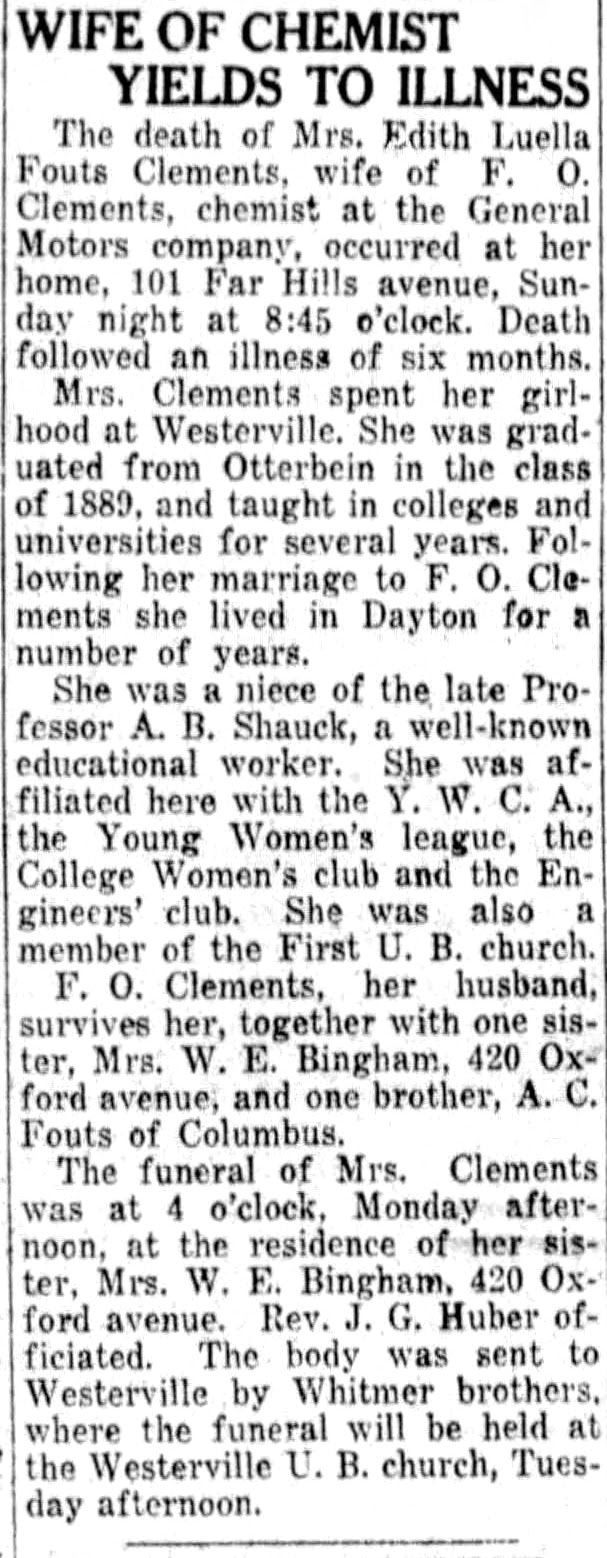
After Luella’s passing at age 53, Frank later married Vida Shauck. The Clements were major Otterbein benefactors. Clements Hall and the Clements Recreation Center are named for them. They are interred at Otterbein Cemetery.Photo credit: Dayton Daily News 6/14/1920.
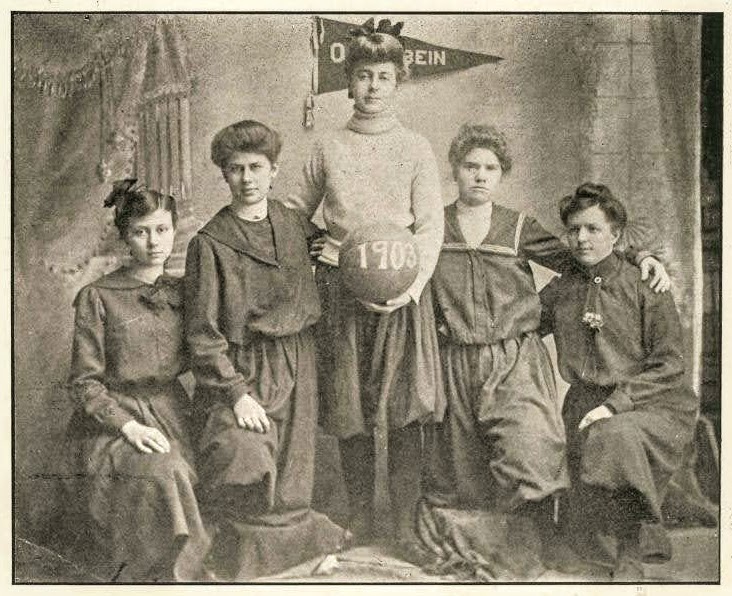
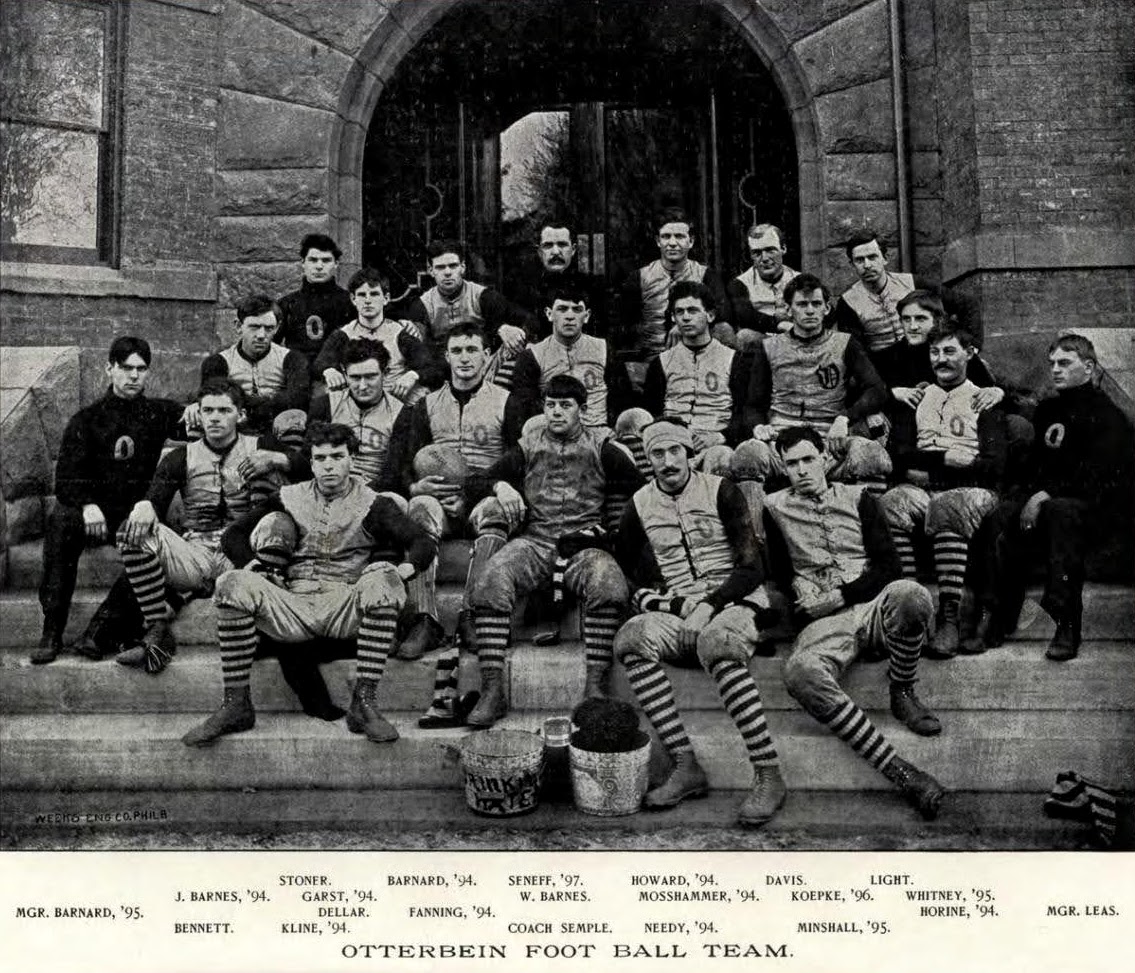
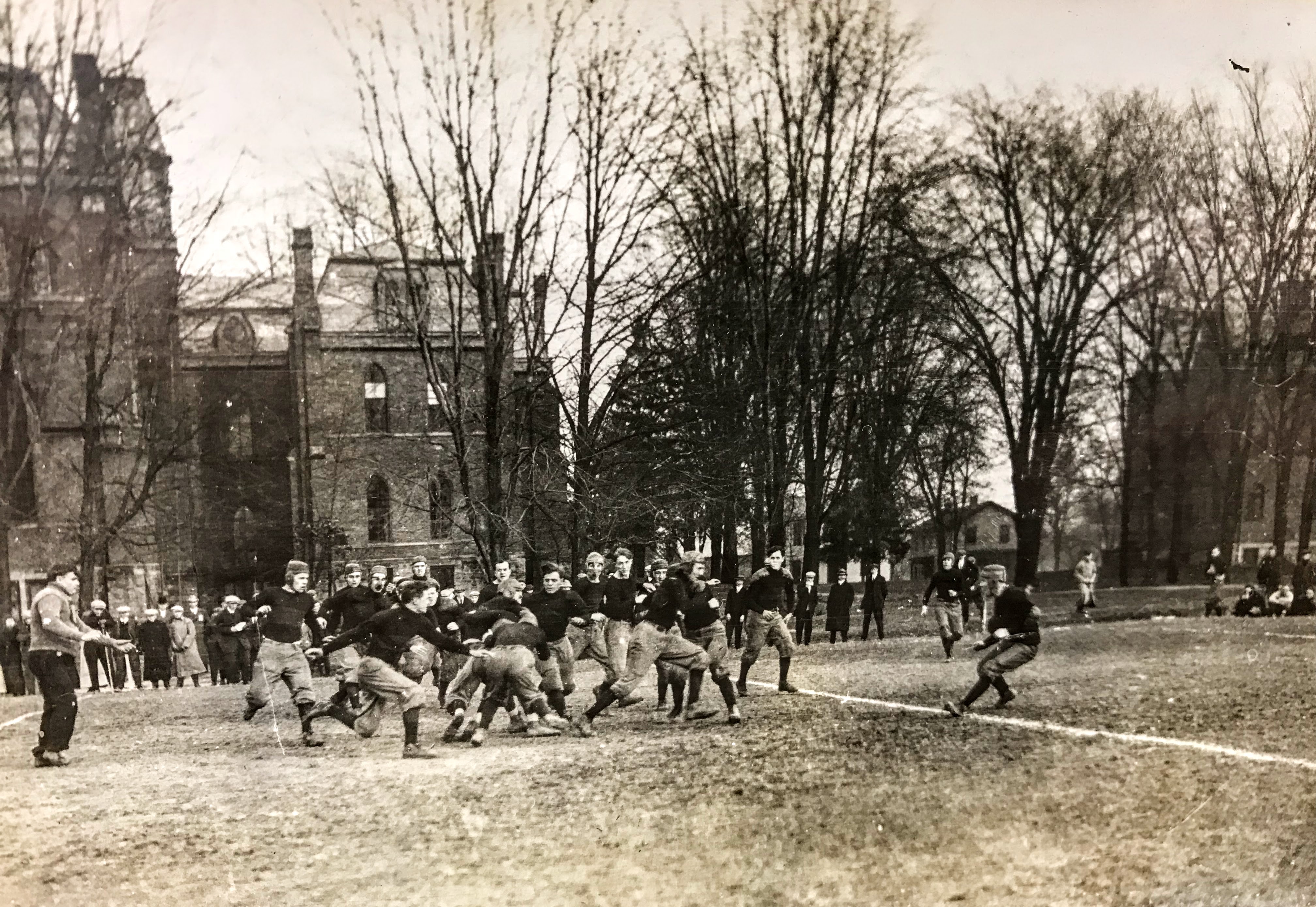
Luella’s father Samuel was a postmaster of Westerville. They are interred at Otterbein Cemetery.Basketball (based at the Sosh) was the first women’s sport at Otterbein and the first season was 1903. Photo credit: 1903 yearbook Sibyl, Otterbein Digital Commons.1893 football team (based at the Sosh 0. Among victories…defeated Ohio State 22-16. Also defeated Ohio State in 1891 and 1895. Note Mgr. Barnard (Ernest) on the left and Barnard (Laurence) second from left in the top row. Photo credit: December 1893 issue of the Otterbein Aegis, Otterbein Digital Commons.
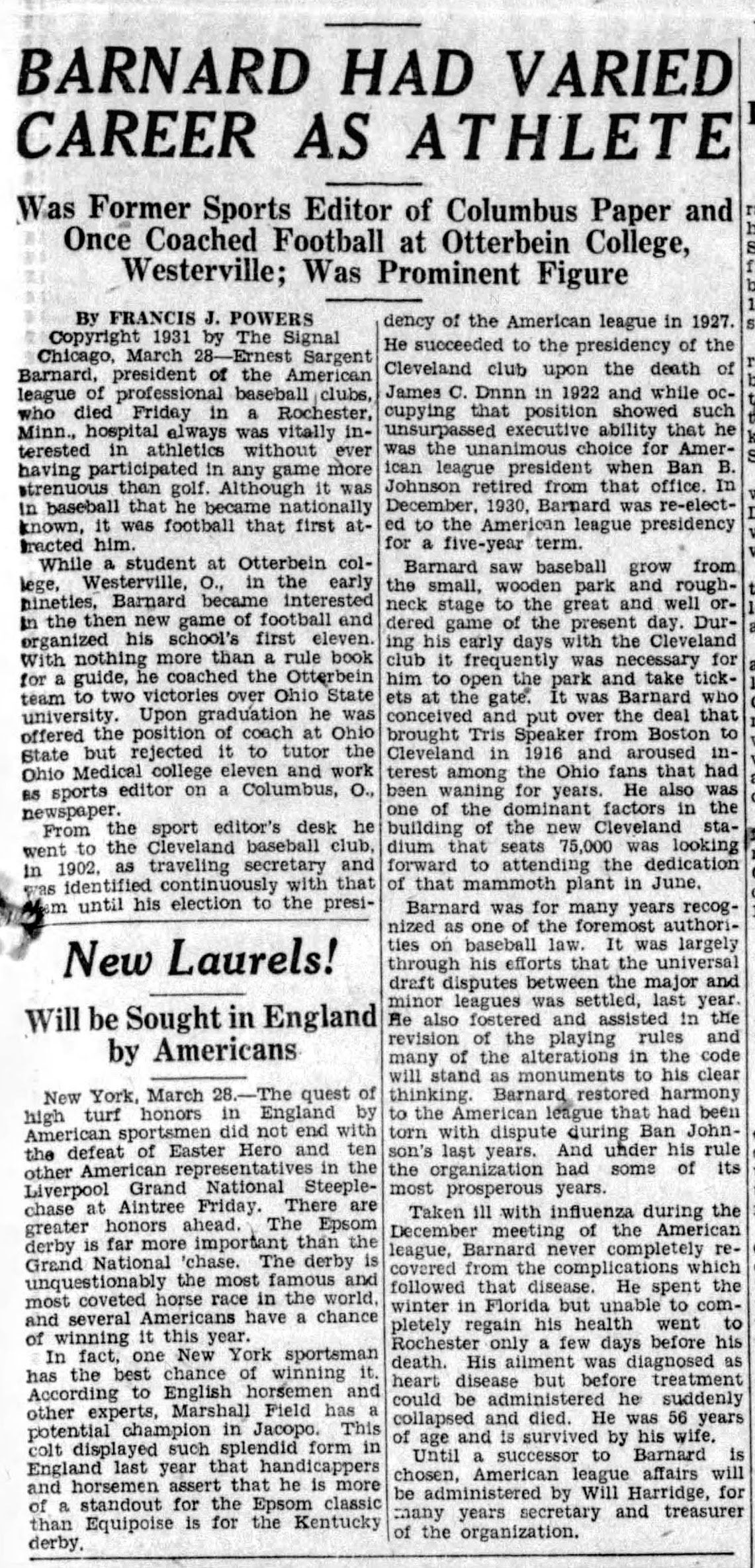
Ernest Sargent Barnard, Class of 1895.He became well known and well respected in the United States. President of the American League in baseball at his unexpected death in 1931.
The Zanesville Signal 3/28/1931.
Laurance Barnard, Class of 1894 and brother of Ernest. Had quite a reputation as a collegiate football player. Photo credit: history book Otterbein College: Affirming Out Past/Shaping Our Future.
Fresh out of college, Laurence was employed by the architectural firm that designed the Sosh building. He married, moved to New Rochelle, New York, (contiguous to New York City) and established an architectural practice there. Photo credit: The Columbus Dispatch 9/22/1894.
Westerville was the first community to be connected to an interurban line from Columbus. That was in 1895. The large interurban car barn, power station and depot in downtown Columbus are of the same architecture as Westerville’s interurban car barn above. It still stands at North State Street and Old County Line Road. My guess is Laurence designed it.Intercollegiate football was initially played behind Towers Hall. The Sosh building is on the right.Photo credit: Otterbein Archives.Physical Director Fouts may have dealt with ornery fellas like this at the Sosh. 🙂 This is a postcard that I think was taken in the block where Church of the Master UM and Clippinger Hall stand.50th Anniversary. Above picture on the right enlarged below. Photo credit: Otterbein Digital Commons.
Photo credit: Otterbein Archives.
Photo credit: Public Opinion 8/21/1975.
Reflection from a blog of Otterbein Professor Dr. David Deever:
My grandmother, Myrtle Miller Stoner, was the president of the college YWCA at the time the building was to be built, and as such was one of several to break ground. The building was built to house the college YMCA and YWCA organizations; hence the name “Association Building.” It was financed in large measure with student contributions.
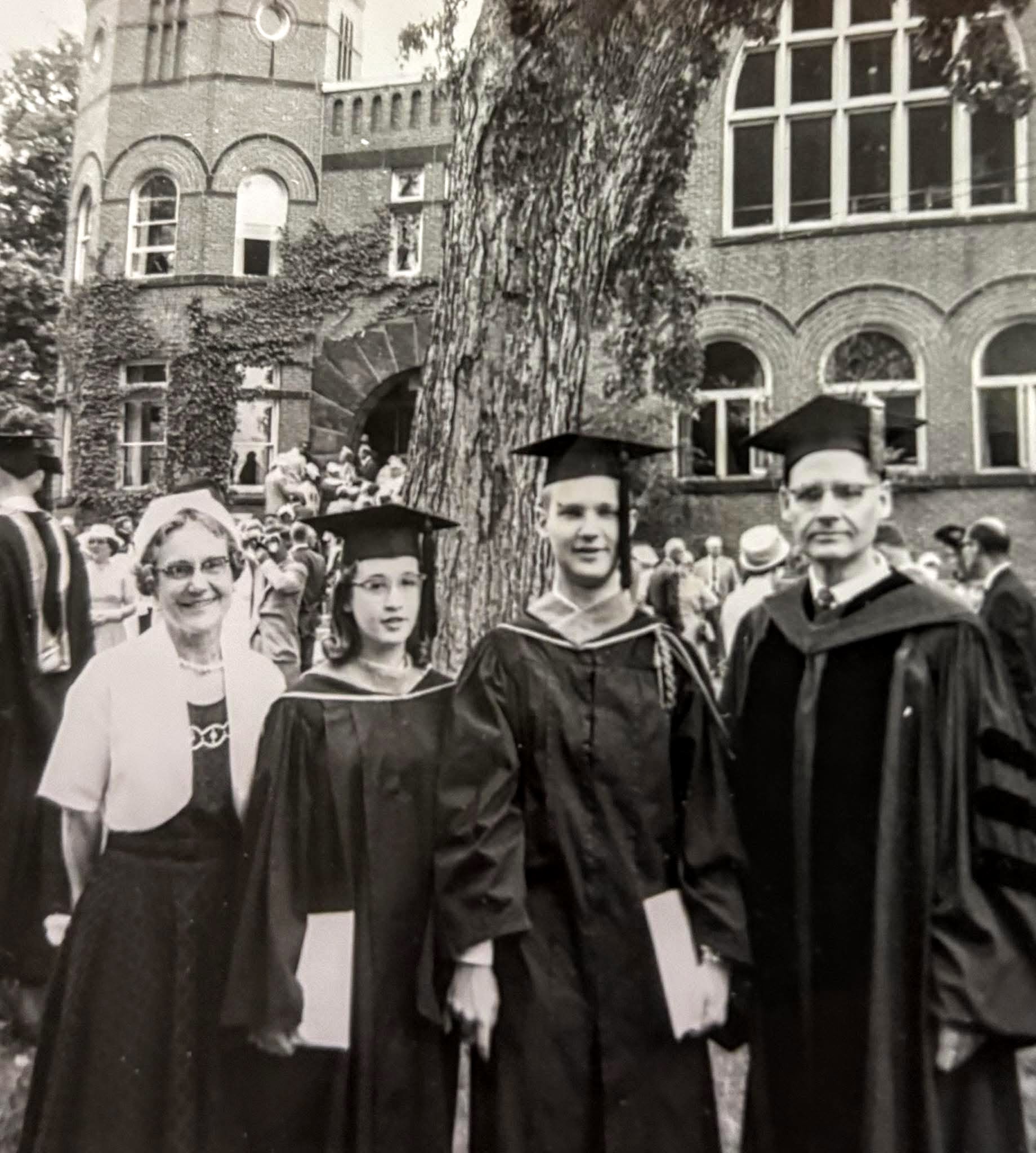
The “Sosh Building” was the scene of many campus activities over the years. It housed the Women’s Physical Education department until the Rike Center was built. At the same time (since Dean VanSant was a P.E. teacher) it was home to the office of Dean of Women. For many years the band practiced there. Many organizations met in its lounge. Especially, for many years, commencements ended with the graduates assembling on its steps, singing the Love Song, listening to taps being played (with echo), and then finally tossing their caps into the air.
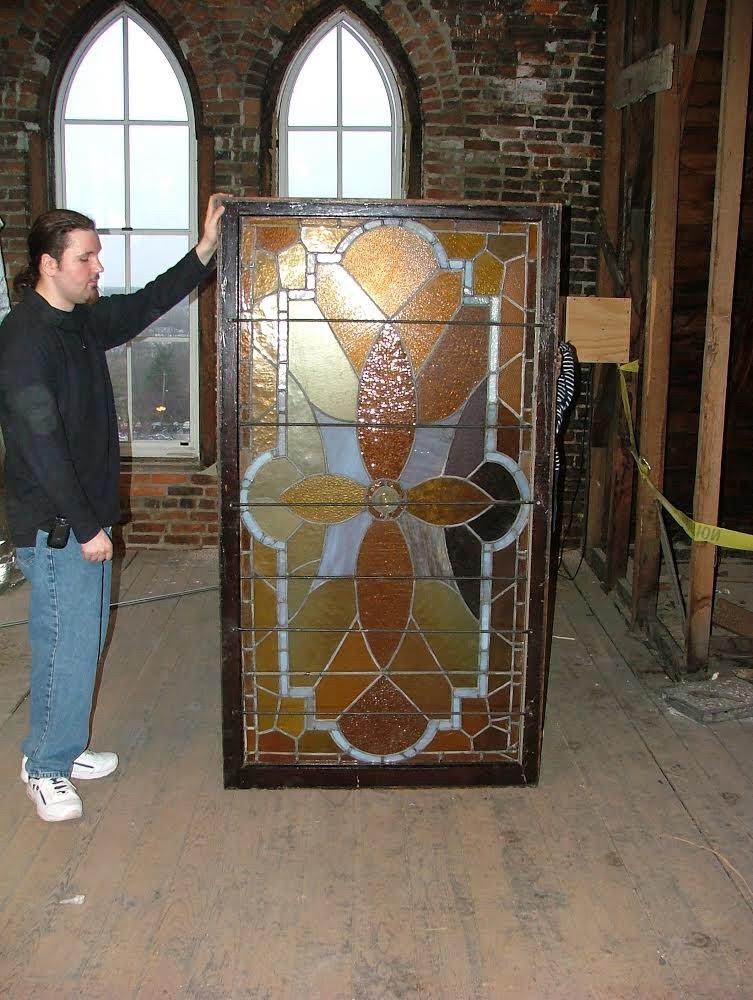
Dr. David and Sara (Elberfeld) Deever, center, at their 1961 commencment. Photo credit: Sara Deever.This memorial is in stairway on the south side of Roush Hall leading to the second floor.There are 2 of these windows in storage. It looks like both came from the front entry. The one pictured above is in the attic of Towers Hall. It would be nice to see these mounted in Roush Hall as well.
October 1923.
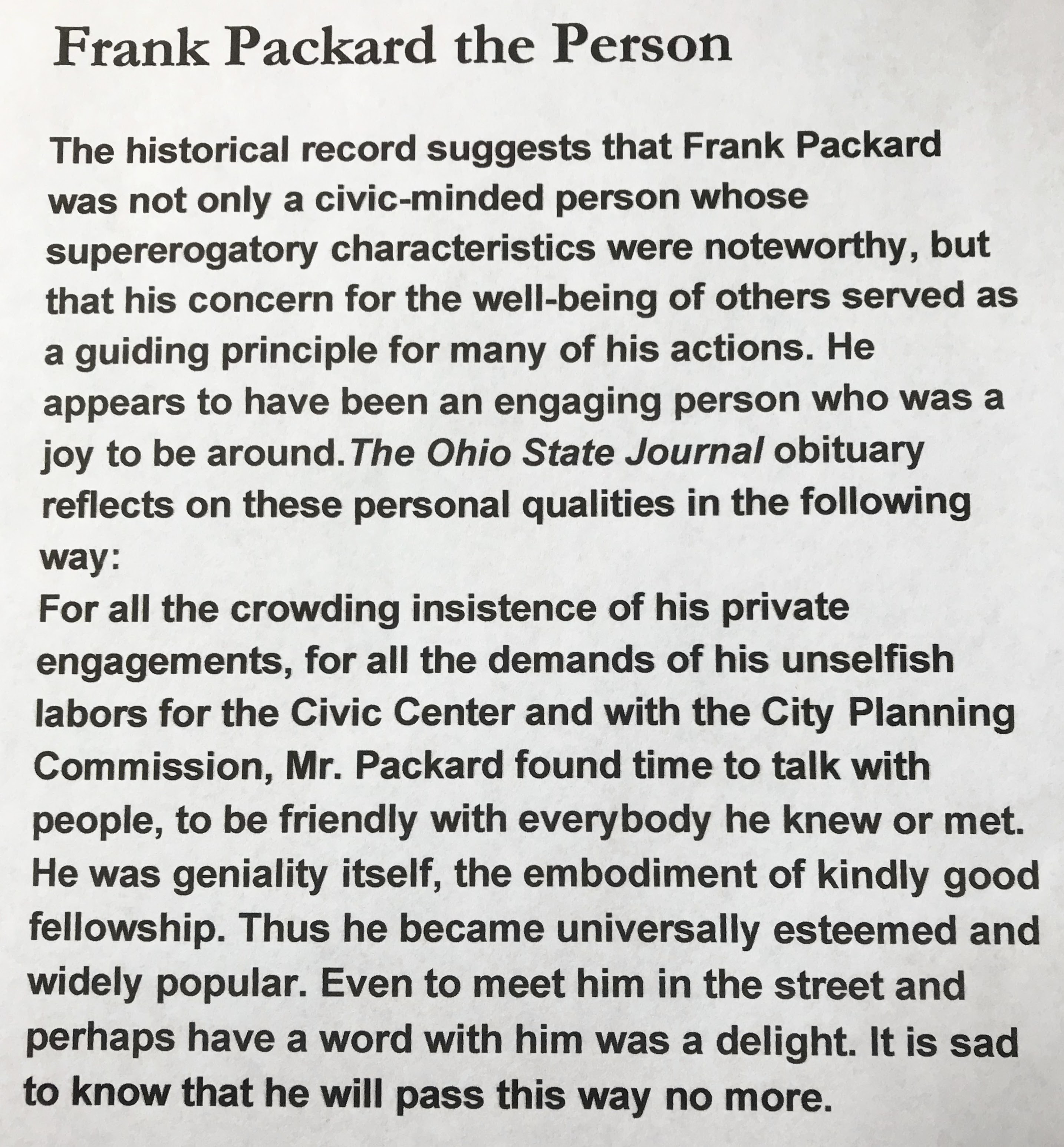
Sosh architect Frank Packard died of a stroke at age 57 on October 26, 1923. The Public Opinion of November 1 reported the following:
“Noted Architect Did Work in Westerville. The death of Frank L. Packard, noted architect of Columbus, recalls to many Westerville people the fact that he was the architect of the Vine Street school building. Mr. Packard was also developing the Otterbein College building program. He was well known by many Westerville people.”
Here is a link to the architectural work (not just limited to Otterbein) of Yost & Packard in Westerville.























 Histories and Mysteries